From 23 to 24 April 2026, partners of the Erasmus+ project Pathways to Creative Careers (P2CC) gathered in Rijeka for a working meeting hosted by Urbani Separe. But beyond presentations and work sessions, the meeting became an opportunity to experience the city through the lens of community-based artistic practice.
Over two days, participants worked on the development of the upcoming Online Guide and Toolkit for Youth Arts Educators, exchanging methods connected to group mentoring. Many of the conversations focused on practical tools that can support young people in becoming more active in their communities — from collective mapping and storytelling exercises to participatory walks, group reflection methods and other creative facilitation techniques.
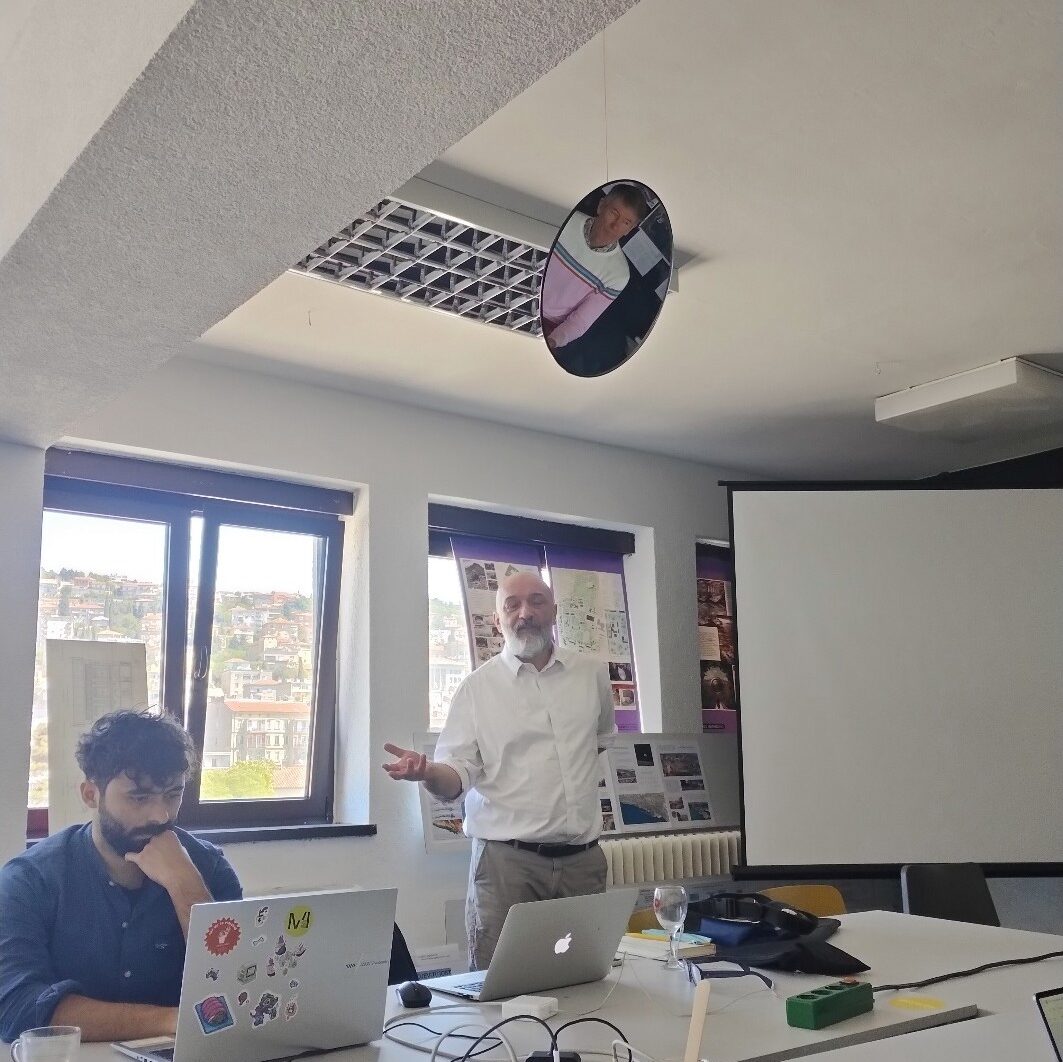
As part of its long-term community work, Urbani Separe often uses informal and participatory methods such as neighbourhood conversations (“ćakule”), collective cooking sessions, walks and small-scale public interventions as ways of bringing people together and opening dialogue about the city and community life. During the meeting, the method of the walk itself became a way of presenting Rijeka and sharing experiences from previous projects.
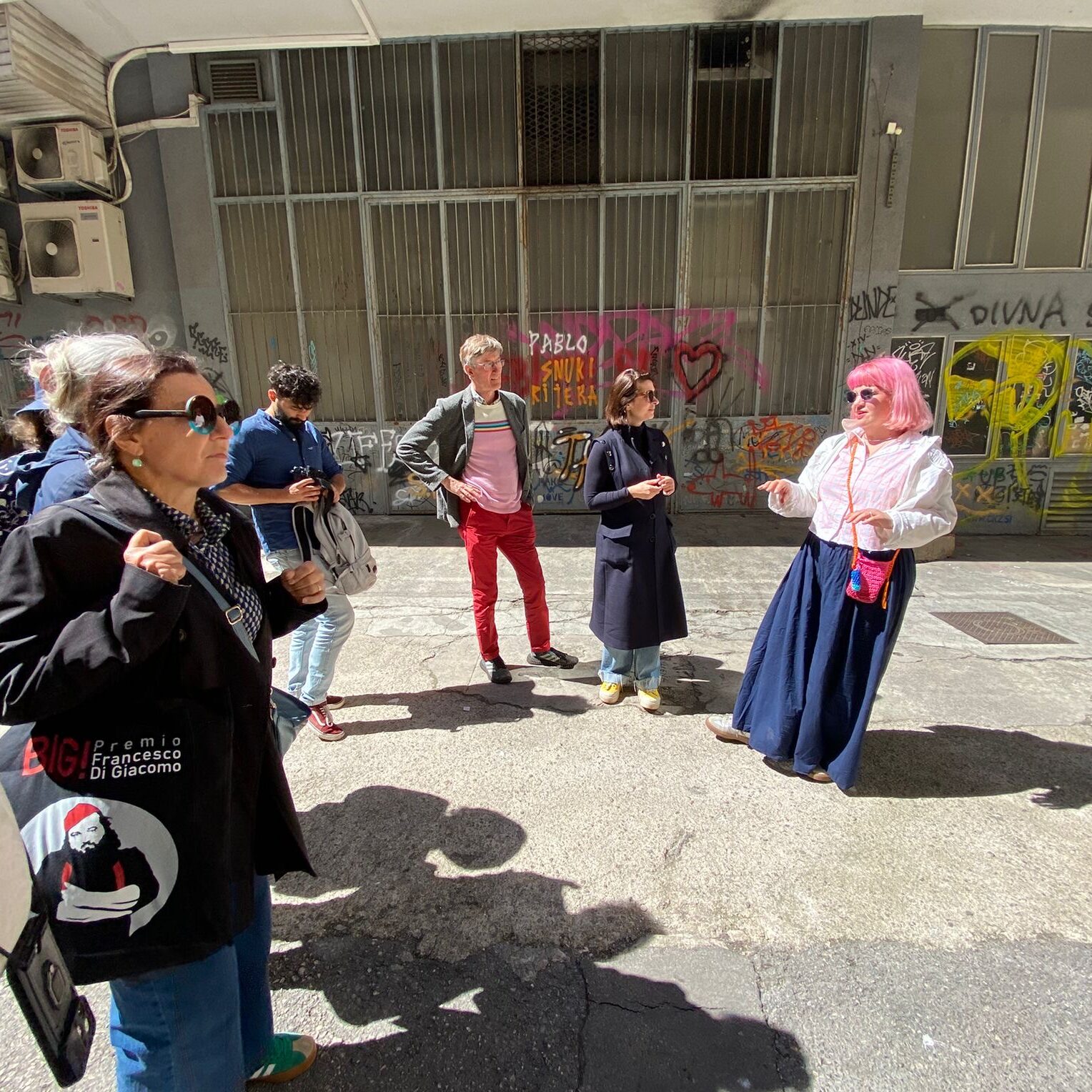
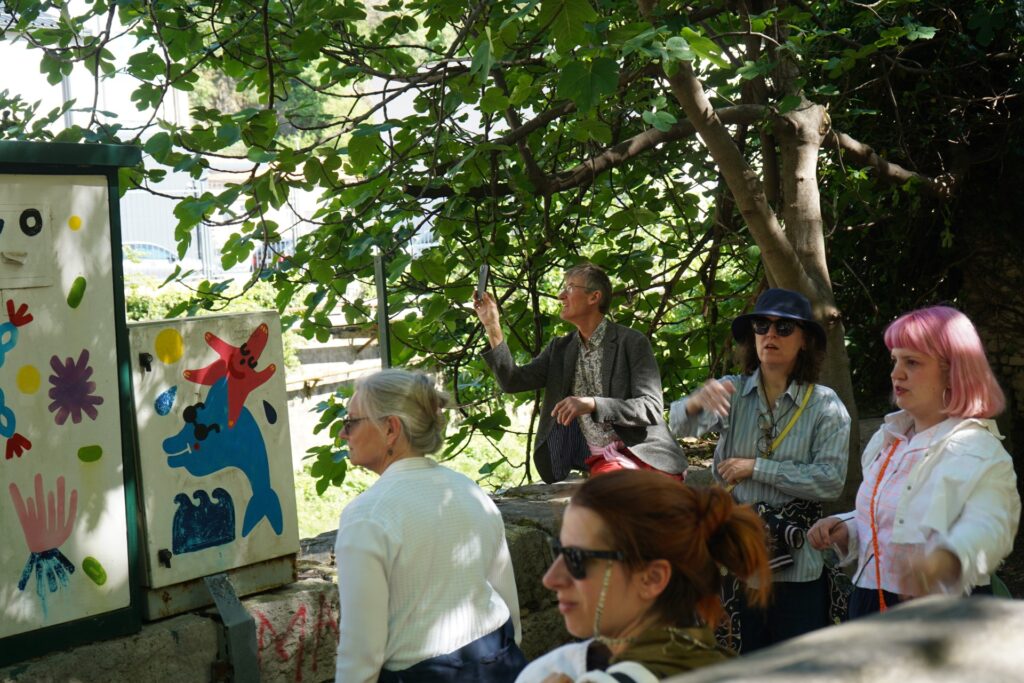
Participants were guided through several locations connected to the long-term programme Fictional Local Committees, including Kružna Street, Hartera, Ružićeva Street, Klobučarić Square and the area around the Rječina river. Through these visits, partners were introduced to projects that gradually activate local communities and encourage collaboration between different actors connected to these neighbourhoods — from local councils and grassroots initiatives to non-profit organisations, small businesses, artists and residents themselves.
The walks opened conversations about long-term community work, participation, temporary use of public space and the role of culture in strengthening social connections and local identity. Many of the projects presented were not focused on large transformations, but rather on slow and continuous processes of building trust, visibility and participation through everyday interactions, shared activities and collective actions.
Alongside the site visits, partners continued working on the methods that will soon be tested locally through Collective Action Projects in each partner country. The projects will involve young people directly in creative activities connected to local challenges, public space and community life, while also creating opportunities for mentoring, peer learning and collaboration.
More updates about the upcoming community projects and shared methodologies developed within P2CC are coming soon.