Section 00
Critical Thinking & Media Literacy
How visual literacy and critical thinking equip young creatives to question what they see, resist passive consumption, and use art as an active tool for making sense of a media-saturated world.
Section 01
Introduction
At Press to Exit Project Space – Skopje, critical thinking is not understood as an abstract intellectual skill but as a situated practice of looking, interpreting, and making connections. It is grounded in visual literacy and artistic analysis, where inquiry often begins with the question of how an image functions — not only what it shows, but how it operates within specific cultural, educational, and media contexts. Each exhibition and workshop becomes a temporary laboratory for examining how visual forms structure perception and how artistic practice can interrupt dominant ways of seeing.
Since its founding, these concerns have been central to our programmatic work, particularly in relation to criticality in artistic practice and awareness of the socio-political, cultural, and economic conditions in which we operate. While the term “critical thinking” may at times appear outdated, we continue to understand theory and practice as deeply interdependent: theory informs practice, and practice, in turn, reshapes theory. In this sense, criticality does not imply distance or detachment, but an engaged awareness — the capacity to recognise contradictions, navigate complexity, and sustain reflective attention in conditions of information overload.
Read the full introduction
Within this framework, critical visual literacy becomes a core working method. It connects artistic practice with inquiry, teaching with seeing, and exhibition-making with analysis. By approaching visual culture as a field of interpretation rather than instruction, Press to Exit Project Space cultivates a form of critical thinking that is both conceptual and visual, grounded in practice, attentive to detail, and open to complexity.
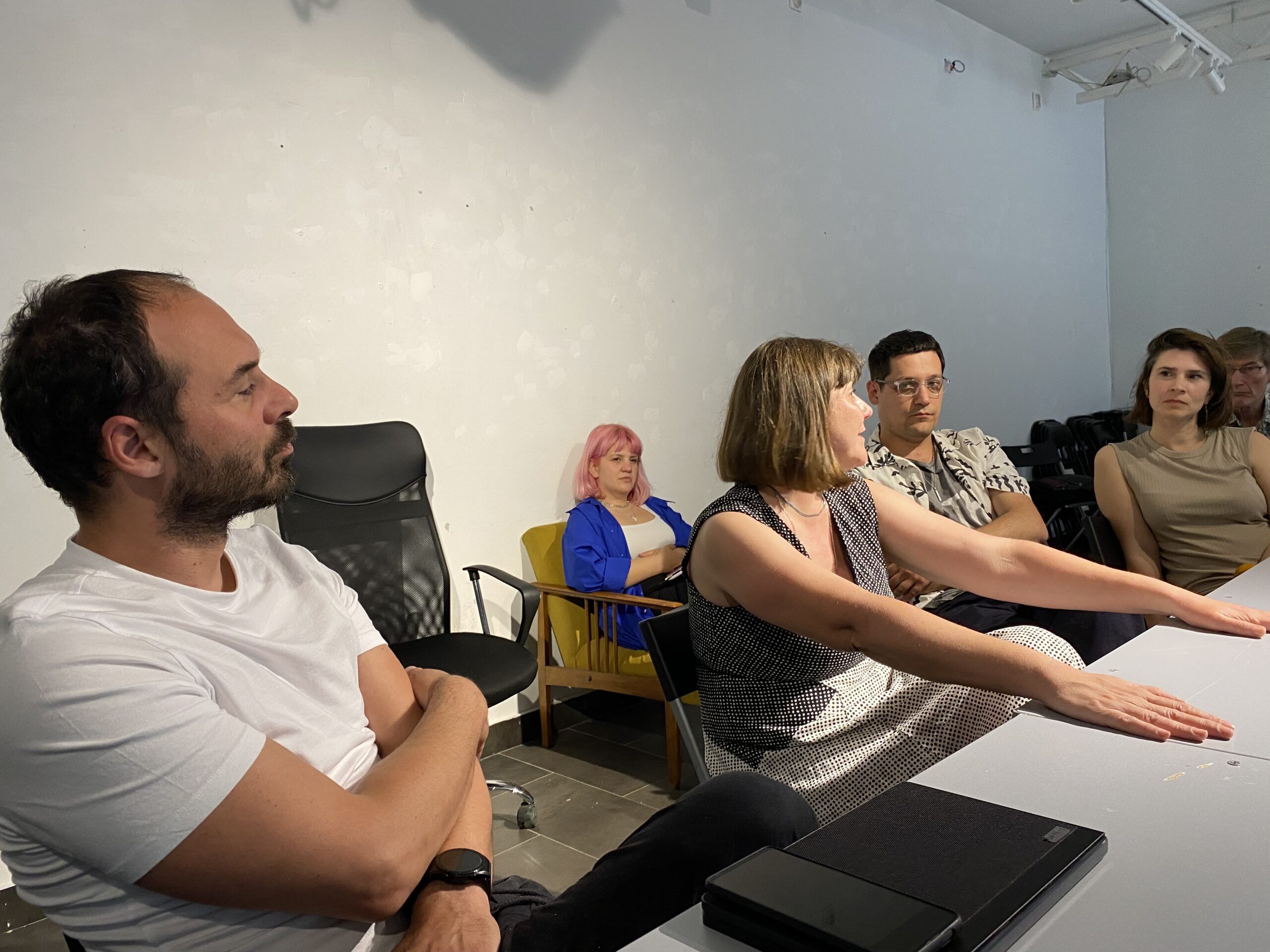
This orientation also informs our educational methodology. During the Skopje Co-Production Lab (2–4 June 2025), the discussion on Critical Thinking and Media Literacy expanded into the pedagogical field, exploring how visual literacy can be taught not as the accumulation of knowledge about images, but as a process of unlearning habitual ways of seeing. The focus shifted from what an image represents to what it does — how visual structures shape perception and interpretation.
The exercises developed in this context combined analytical and experiential approaches, including prolonged observation, translation between visual and verbal registers, and collaborative interpretation of media. Here, critical thinking was understood not as evaluation, but as active attention: the ability to hold multiple meanings simultaneously and remain aware of how narratives are constructed.
The program Critical Thinking and Media Literacy was developed as a series of interconnected discussions and exercises exploring how theory can be activated through artistic and curatorial practice. It brought together practitioners working across different fields of art and education, each demonstrating distinct but complementary approaches to critical engagement.
Following these presentations, participants engaged in a collective discussion on how artistic education can foster independent thought and critical perception in media-saturated environments. This positioned art not as an object or outcome, but as a method of inquiry — a way of analysing and reorganising perception itself.
To extend this approach, several reflective exercises were developed for inclusion in this guide. These include defining critical thinking in relation to one’s own practice, reflecting on concrete moments where it was applied, and examining the relationship between theory and practice. Other exercises focus on contextual awareness, media analysis, archival research, and the role of curatorial language in shaping interpretation.
Across these formats, critical visual literacy functions as both method and ethics. It enables participants — artists, educators, curators, and publics — to understand visual culture as a field of negotiation rather than passive consumption. In this sense, critical thinking is redefined as a visual and embodied process: a way of seeing that questions what is shown, what remains unseen, and what structures visibility itself. It allows art to operate not as decoration or commentary, but as an active site of reflection, experimentation, and knowledge production within the shifting conditions of the contemporary.
Section 02
Tools and Resources
Press to Exit Project Space – “Reflections from Skopje: Building the Foundations for the P2CC Online Guide”
This text documents the Skopje Co-Production Lab (2–4 June 2025), where Press to Exit Project Space introduced critical thinking and media literacy as core methodological tools for mentoring in the cultural and creative sectors. The publication outlines how participants worked through case studies, visual analysis, and collaborative exercises to understand how images construct meaning and how critical reflection can be embedded in mentoring practice. It positions critical thinking not as a theoretical category but as a situated, practice-based process grounded in visual literacy, dialogue, and collective interpretation. The text also reflects on how mentoring frameworks can be developed across European partners within the P2CC project.
European Audiovisual Observatory – Media Literacy and Information Contexts
The European Audiovisual Observatory provides research and data on audiovisual industries, media regulation, and information ecosystems across Europe. Its reports on media literacy, platform governance, and content circulation are useful for understanding how images and narratives are produced, distributed, and regulated in contemporary media environments. For practitioners working in art and education, the Observatory offers a macro-level perspective on the infrastructures that shape visibility and access. It helps situate critical thinking within broader political and economic systems of media production, offering valuable context for reflecting on how cultural work enters public discourse and how audiences engage with mediated content.
UNESCO Media and Information Literacy (MIL) Curriculum
UNESCO’s Media and Information Literacy (MIL) Curriculum is a widely used global framework for developing critical engagement with media, information, and digital environments. It provides pedagogical tools for analysing media messages, understanding information sources, and recognising bias, misinformation, and framing techniques. While originally developed for formal education contexts, its exercises can be adapted for artistic and curatorial practice. The curriculum emphasizes inquiry-based learning, encouraging users to question not only what information is presented, but how and why it is constructed. It is particularly relevant for mentoring contexts where critical reflection and media awareness are central learning objectives.
School of Disobedience (Budapest, Hungary)
Founded by artist and educator Anna Ádám, the School of Disobedience is an independent artist-run educational platform based in Budapest that combines artistic research, critical pedagogy, mentoring, and experimental learning. Positioned as a space for both learning and unlearning, the school challenges traditional educational hierarchies by encouraging participants to question inherited assumptions, institutional norms, and dominant modes of knowledge production. Through workshops, mentorships, performance-based practices, and facilitator training, the project foregrounds critical inquiry, collective learning, and artistic agency. Particularly relevant to critical thinking and media literacy is its emphasis on self-reflection, experimentation, and developing independent positions through embodied and collaborative forms of learning.
Suggested use:
Useful as a reference for alternative pedagogies, mentoring methodologies, artistic facilitation, and critical approaches to education.
Tactical Media and Critical Cultural Practice – Press to Exit Archive Project “Hacking the Future”
“Hacking the Future” is a research-based platform developed within Press to Exit Project Space that explores tactical media, digital culture, and critical artistic practice. The project functions as an open archive of artistic and activist strategies that engage with media systems, public space, and institutional structures. It examines how artistic practices can intervene in dominant narratives through digital tools, collaborative production, and critical engagement with information systems. The platform positions media literacy as an active practice of reading, producing, and disrupting media environments, linking artistic research with civic and political awareness.
MEDUZA Platform (Skopje, North Macedonia)
MEDUZA is an independent feminist platform for critical media, publishing, and education based in Skopje. Through essays, interviews, research, public campaigns, and collaborative editorial practices, MEDUZA addresses questions of gender, labour, social justice, cultural production, and public discourse in North Macedonia and the wider region. Particularly relevant to critical thinking and media literacy is the platform’s commitment to questioning dominant narratives, exposing structural inequalities, and cultivating critical reading practices in relation to media representation and public communication. By combining accessible language with rigorous analysis, MEDUZA demonstrates how independent media can function as a space for civic engagement, reflection, and knowledge production.
Suggested use:
Useful as a reference for feminist media literacy, critical reading practices, independent publishing, and understanding how media representation shapes public perception and social participation.
Section 03
Cross-Thematic Resources
GRADIDNINA: The Garden as an Instrument, the Permaculture as a Methodology
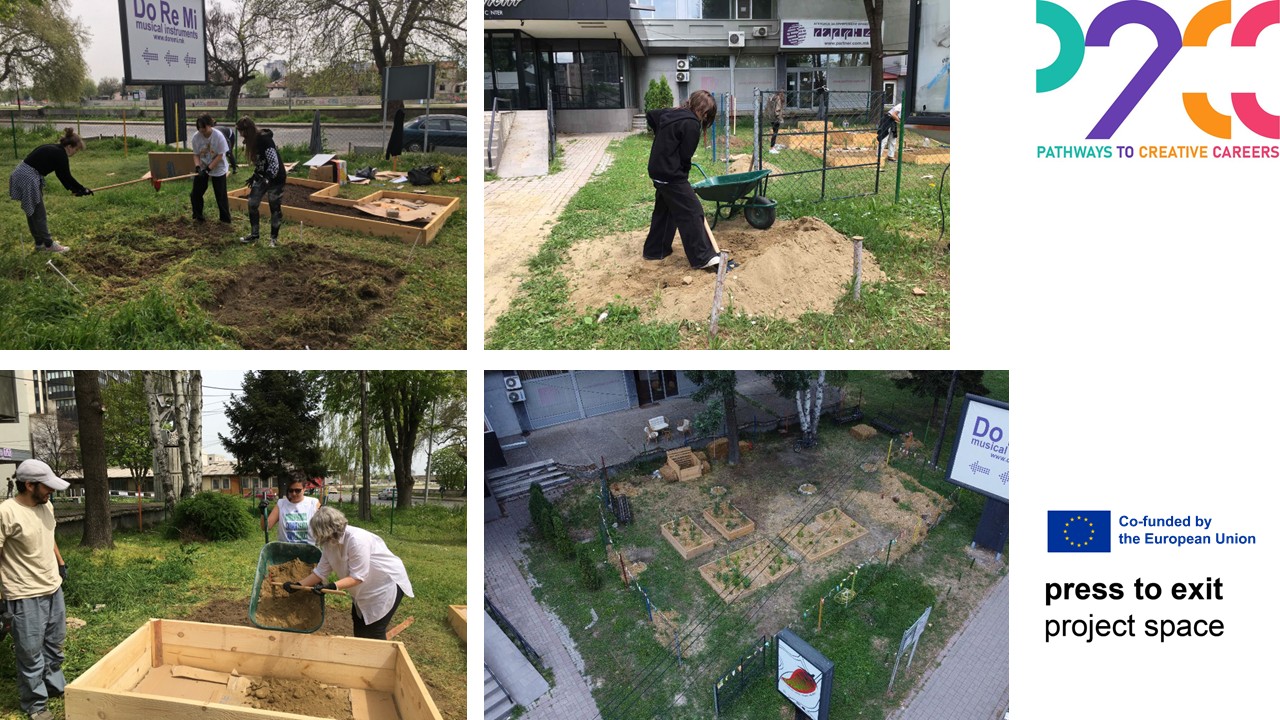
GRADIDNINA, developed by Hristina Ivanoska, Yane Calovski and Hayan Alhalabi within Press to Exit Project Space, and Margarita Arsova within MKC - Youth Cultural Centre Skopje, uses the garden as both conceptual and methodological framework.
Details
GRADIDNINA, developed by Hristina Ivanoska, Yane Calovski and Hayan Alhalabi within Press to Exit Project Space, and Margarita Arsova within MKC – Youth Cultural Centre Skopje, uses the garden as both conceptual and methodological framework. While grounded in ecological thinking, it extends into pedagogical and curatorial reflection, treating cultivation as a form of knowledge production. The project approaches growth, maintenance, and seasonal transformation as tools for understanding time, attention, and care. In this sense, ecological practice becomes inseparable from critical thinking, offering a way to reflect on systems of interdependence and observation. GRADIDNINA connects environmental awareness with artistic methodology and positions the garden as a site of slow, reflective learning.
Design Studio Practice
Klilija Zhivkovikj’s Design Studio practice operates at the intersection of design, education, and social engagement.
Details
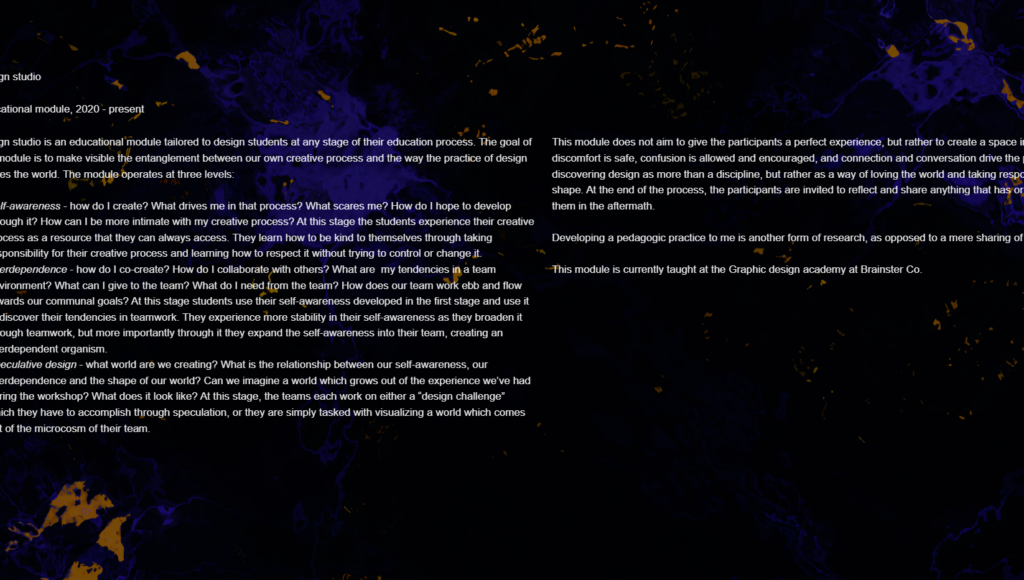
Klilija Zhivkovikj’s Design Studio practice operates at the intersection of design, education, and social engagement. It focuses on collaboration as a critical response to systems shaped by extraction, precarity, and inequality. Through collective making and dialogue, the studio becomes a space where knowledge is co-produced rather than transmitted. This approach frames design not only as problem-solving but as a reflective and critical practice that engages with social structures and material conditions. It links creative production with media literacy by encouraging participants to examine how design shapes perception, communication, and systems of value in contemporary culture.
Ecological and Activist Artistic Practice
Zorica Zafirovska’s practice brings together ecological awareness, activism, and artistic production, focusing on care, repair, and responsibility as both ethical and aesthetic frameworks.
Details
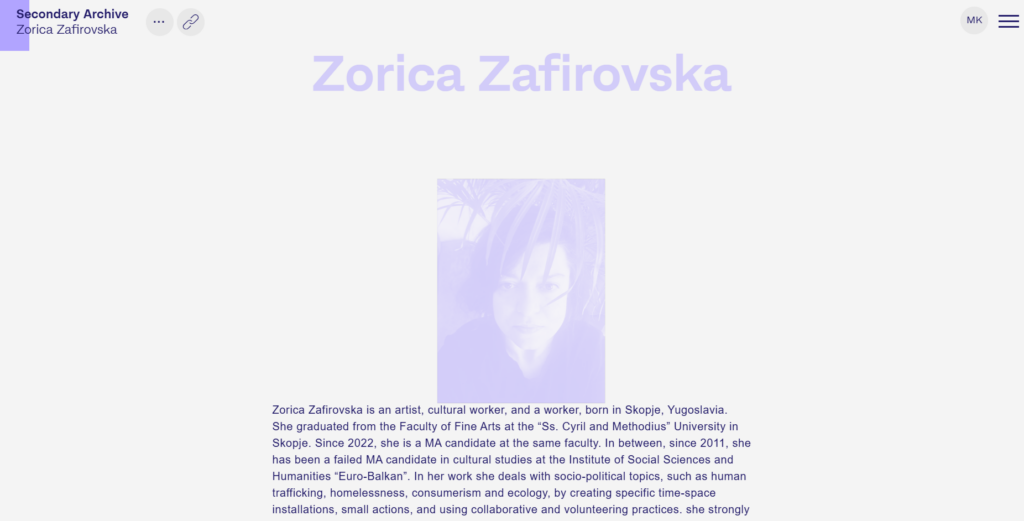
Zorica Zafirovska’s practice brings together ecological awareness, activism, and artistic production, focusing on care, repair, and responsibility as both ethical and aesthetic frameworks. Her work reflects on environmental processes while also engaging with public discourse and collective action. It positions art as a site for examining how ecological narratives are constructed and communicated, and how they shape understanding of human and non-human relationships. Through situated and often participatory approaches, her practice connects ecological thinking with broader questions of social responsibility, visibility, and the role of artistic work in addressing urgent environmental and political conditions.
Bojana Janeva-Shemova, Museum of Contemporary Art – Skopje
At the Museum of Contemporary Art – Skopje, Bojana Janeva-Shemova develops educational and curatorial programs that position the museum as a space of dialogue and accessibility.
Details

At the Museum of Contemporary Art – Skopje, Bojana Janeva-Shemova develops educational and curatorial programs that position the museum as a space of dialogue and accessibility. Her practice focuses on inclusive pedagogies that engage diverse audiences, including children, adults with disabilities, and communities outside the cultural centre of Skopje. These initiatives emphasise critical engagement with artworks through discussion, interpretation, and shared reflection, rather than passive reception. Her work connects institutional education with critical thinking by transforming the museum into a space of active learning, where interpretation becomes collective and where media literacy is understood as participation in cultural meaning-making.
Nikola Uzunovski
Nikola Uzunovski’s artistic and educational practice explores the intersection of environmental systems, technology, and speculative imagination.
Details
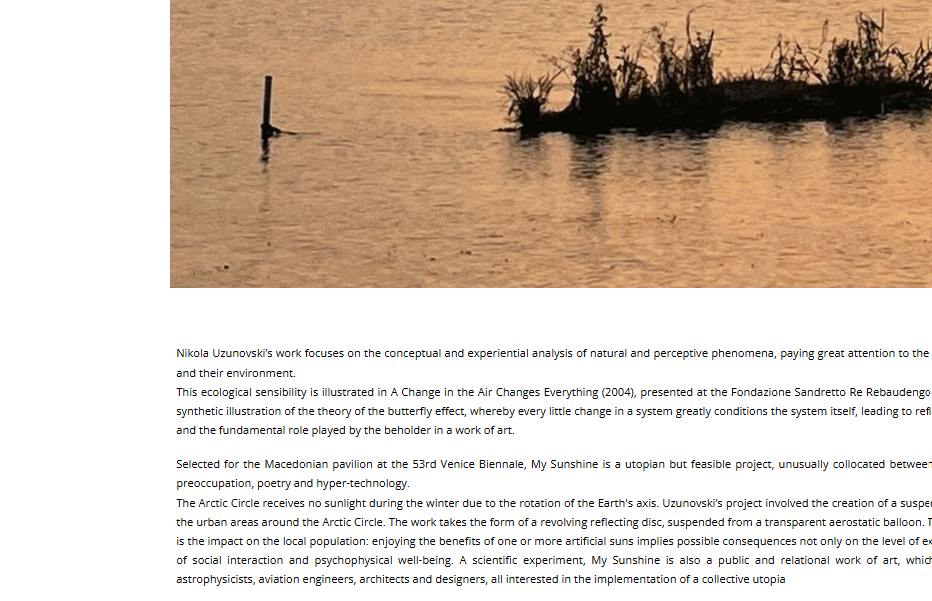
Nikola Uzunovski’s artistic and educational practice explores the intersection of environmental systems, technology, and speculative imagination. Projects such as My Sunshine investigate scientific and ecological themes through poetic and conceptual interventions, often linking artistic production with broader technological and environmental infrastructures. In his teaching, he encourages students to contextualise their work within wider cultural and ecological systems, developing forms of media literacy that extend beyond interpretation into relational thinking. His practice demonstrates how artistic research can operate across disciplines, combining visual culture, science, and pedagogy to foster critical awareness of contemporary technological and environmental conditions.
Section 04
Topic-Related Activities
Workshop Context & Background
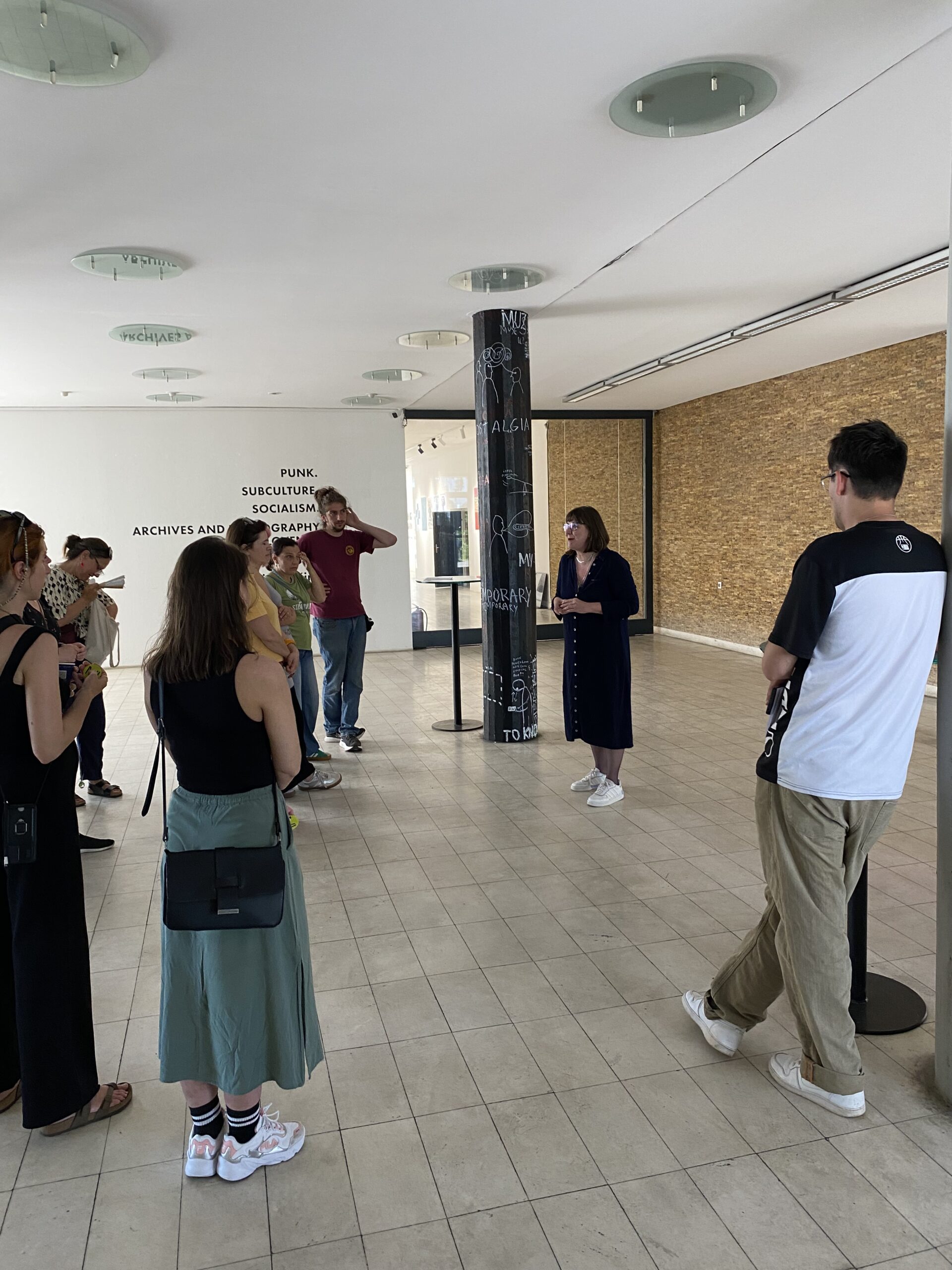
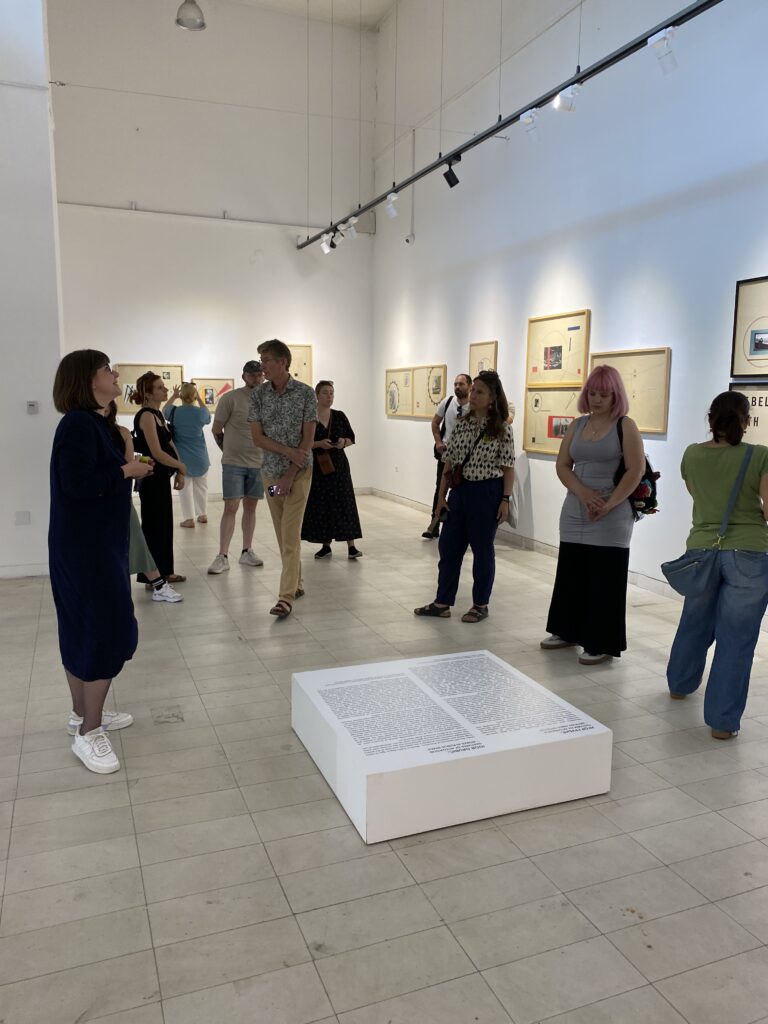
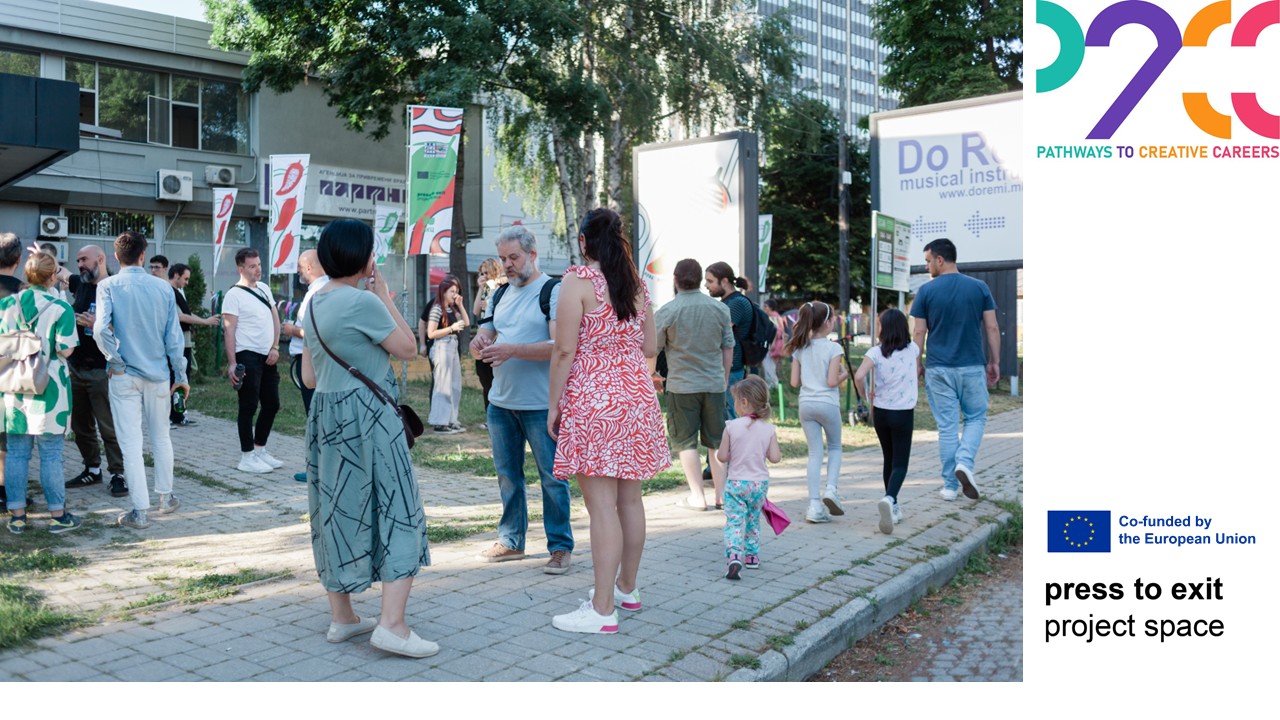
The following activities are designed as simple, transferable tools for exploring critical thinking and media literacy within artistic, educational, and mentoring contexts. They are not intended as fixed exercises, but as adaptable frameworks that can be modified according to group size, setting, and level of experience.
At Press to Exit Project Space, we understand critical thinking not as a theoretical concept, but as a situated practice of attention, interpretation, and reflection. These exercises translate this approach into practical formats that support discussion, individual reflection, and collaborative learning. They are grounded in visual literacy and media awareness, encouraging participants to engage not only with what information or images show, but with how they operate, circulate, and produce meaning.
The activities are designed to be used independently or in combination, either in workshops, mentoring sessions, or self-directed learning environments. Each exercise encourages participants to slow down perception, question assumptions, and reflect on the relationship between practice and context. They also aim to support dialogue between mentors and mentees by offering structured yet open-ended prompts for discussion.
Together, these tools reinforce the idea that critical thinking and media literacy are not separate skills, but interconnected modes of engagement with contemporary visual and cultural environments.
Reading the Image: What Does It Do?
Full Activity Details
Purpose:
This exercise develops critical visual literacy by shifting attention from what an image represents to how it produces meaning. It encourages participants to analyse visual material as an active structure that shapes perception, emotion, and interpretation.
Steps:
1. Select a single image (advert, artwork, news image, social media post).
2. Observe it silently for 2–3 minutes without interpretation.
3. Describe only formal elements (colour, composition, framing, text).
4. Discuss: What effects does the image produce? What assumptions does it rely on?
5. Reflect on how meaning changes when description replaces interpretation.
Duration: 20–30 minutes
Adaptation notes:
Can be done individually or in groups. Works well with printed images, screens, or digital media. Can be expanded into a comparative analysis of multiple images.
Reflection Questions
1. What details did you notice only after slowing down your observation?
2. How does the image shape your response through composition, framing, or language?
3. What assumptions or messages may be hidden within the image?
Mapping Information Sources
Full Activity Details
Purpose:
To strengthen awareness of how information is produced, filtered, and interpreted. The exercise encourages participants to reflect on their own media ecosystems and the reliability of sources.
Steps:
1. List the main sources of information you use daily (media, platforms, people).
2. Categorise them (institutional, social, algorithmic, personal).
Identify which sources you trust most and least, and why.
3. Discuss how these sources influence your understanding of cultural or social issues.
4. Reflect on gaps or blind spots in your information landscape.
Duration: 25–35 minutes
Adaptation notes:
Can be adapted for digital literacy workshops or mentoring sessions. Works well as a written or visual diagram exercise.
Reflection Questions
1. Which sources most influence the way you understand the world around you?
2. How do you decide whether a source is trustworthy?
3. What perspectives or voices may be missing from your information landscape?
From Message to Meaning: Rewriting Interpretation
Full Activity Details
Purpose:
This exercise explores how interpretation is constructed and how meaning shifts depending on framing, language, and context.
Steps:
1. Provide participants with a short media text or caption.
2. Ask them to rewrite it in three different tones: factual, critical, and poetic.
3. Share versions in a group.
4. Discuss how meaning changes depending on language and framing.
5. Reflect on responsibility in interpretation and communication.
Duration: 30–40 minutes
Adaptation notes:
Suitable for both text-based and visual materials. Can be simplified for younger participants or expanded for curatorial contexts.
Reflection Questions
1. How did changing the language alter the meaning of the original message?
2. What responsibility do we have when framing information for others?
3. How can different audiences interpret the same content differently?
Context Lens: What Shapes Your Work?
Full Activity Details
Purpose:
To situate artistic or educational practice within broader socio-political, cultural, or institutional conditions. Encourages awareness of external factors shaping creative work.
Steps:
1. Identify one key context influencing your current practice.
2. Describe how it affects your decisions, methods, or outputs.
3. Discuss whether it enables or constrains your work.
4. Share strategies used to respond critically to this context.
5. Reflect collectively on shared or divergent conditions.
Duration: 25–30 minutes
Adaptation notes:
Works well in mentoring, peer discussions, or institutional reflection sessions. Can be used individually as a journaling prompt.
Reflection Questions
1. What external conditions most influence your work right now?
2. How do these conditions shape your choices and methods?
3. In what ways can critical thinking help you respond to limitations or pressures?
Visual Dialogue: Image–Text Relationship
Full Activity Details
Purpose:
To explore how meaning is shaped through the relationship between visual material and curatorial or interpretative language.
Steps:
1. Present an artwork or image with no explanation.
2. Provide 2–3 different types of text (descriptive, institutional, poetic).
3. Participants match or contrast texts with the image.
4. Discuss how each text changes the perception of the image.
5. Reflect on authorship and responsibility in interpretation.
Duration: 30–45 minutes
Adaptation notes:
Can be adapted for exhibition-making, curatorial training, or media literacy education. Works well as a group discussion or workshop station activity.
Reflection Questions
- How did the accompanying text influence your understanding of the image?
- Which type of language felt most persuasive or limiting, and why?
- What role does interpretation play in shaping public understanding?
Section 05
Mentor Insights
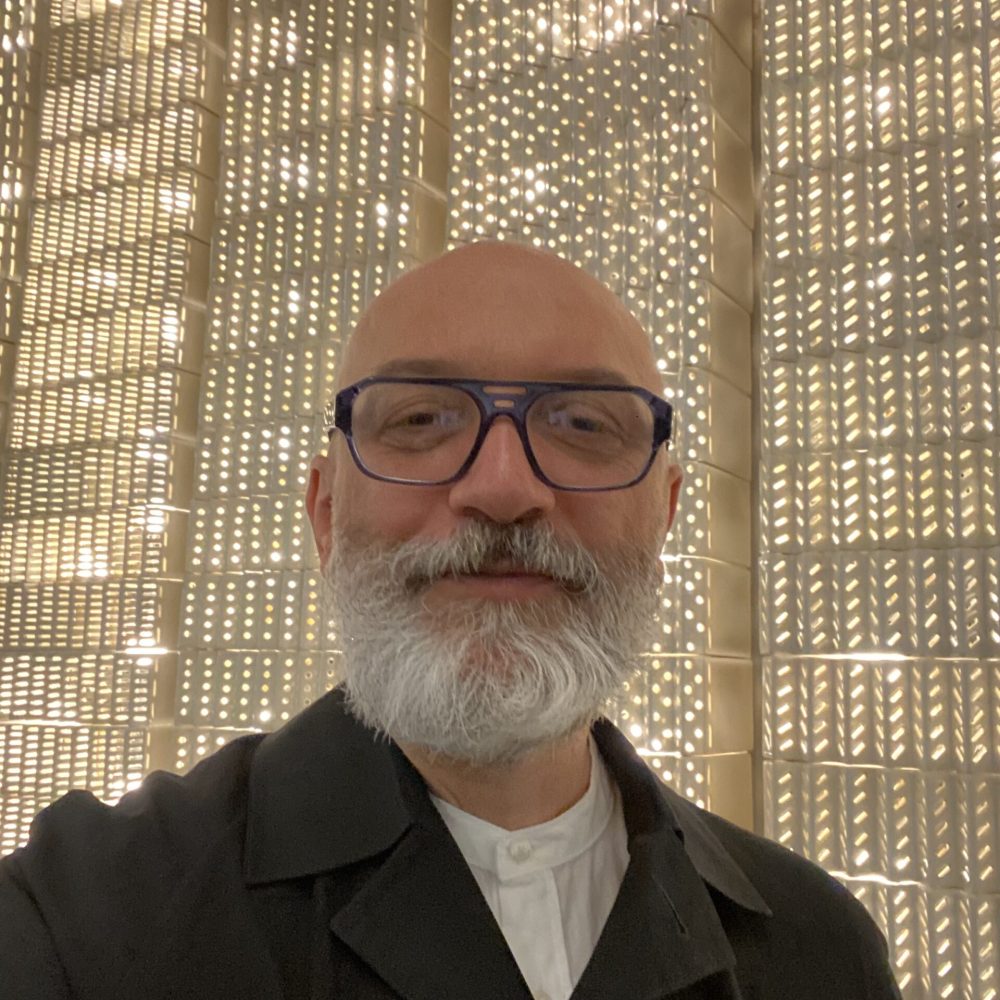
Yane Calovski
Mentoring as Framing, Not Instruction
Read Full Insight
“
In my mentoring practice, I understand mentoring as a process of framing rather than instruction. Instead of providing answers or predefined directions, the role of the mentor is to construct conditions in which critical thinking can emerge through reflection, questioning, and interpretation.
This often involves working with context — how a project is situated, what assumptions it carries, and how it is read across different audiences and media environments. I have found that mentees develop stronger critical awareness when they are encouraged to slow down their decision-making processes and reflect on how meaning is produced not only within their work, but around it.
Mentoring in this sense is not about transferring knowledge, but about creating a space where uncertainty becomes productive. Within this space, critical thinking and media literacy operate together as a shared practice of looking, questioning, and positioning one’s work within broader cultural and social systems.
“
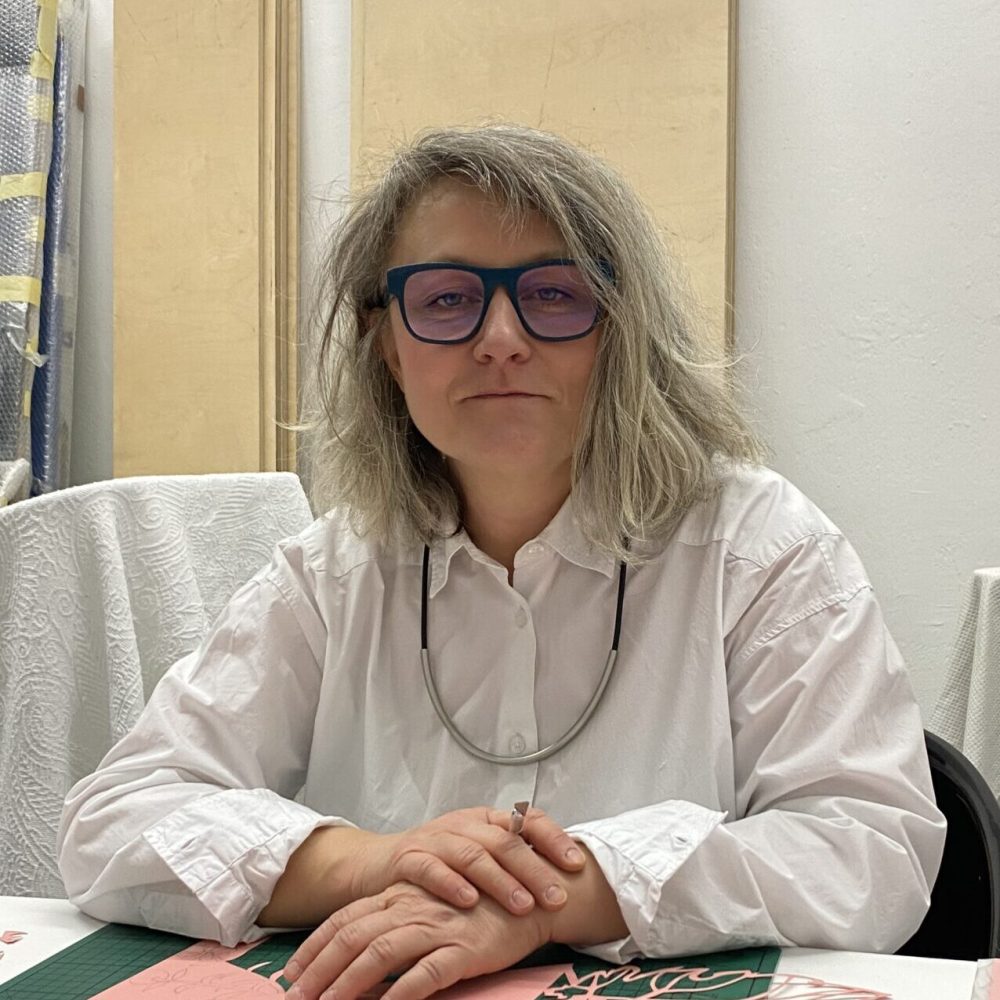
Hristina Ivanoska
The Archive as a Living Question
Read Full Insight
“
My artistic methodology is grounded in research, dialogue, mentoring, and the critical re-reading of historical, social, and cultural narratives. Working across drawing, text, installation, publications, and collaborative projects, I explore how knowledge is produced, transmitted, and remembered. My practice often engages with overlooked histories, marginalized voices, and the structures that shape collective and individual identities.
Archival research is central to my work. I approach archives not as fixed repositories of facts, but as living and incomplete systems open to interpretation. Through the examination of documents, images, literature, and historical records, I uncover alternative perspectives and create connections between past and present, challenging dominant narratives and expanding understandings of history.
Mentoring is an integral part of my methodology. Through dialogue, collaborative inquiry, and the sharing of research processes, I encourage others to develop their own critical and reflective artistic positions. Across both my artistic and mentoring practice, I foster spaces for collective learning, exchange, and the production of new knowledge.
“

Jovanka Popova
Framing Knowledge: Curating, Context, and Critical Thinking
Read Full Insight
“
My curatorial methodology is grounded in research, critical inquiry, mentoring, and public engagement. I investigate how knowledge, information, and cultural narratives are constructed, circulated, and interpreted within contemporary society. A central aspect of my practice is contextual analysis. Through the study of historical archives, institutional structures, and cultural narratives, I explore the mechanisms through which meaning is produced and maintained, while questioning dominant perspectives and drawing attention to overlooked or marginalized voices.
Mentoring and collaboration are fundamental to my approach. Through exhibitions, educational programs, publications, discussions, workshops, and participatory formats, I create opportunities for collective learning, exchange, and critical reflection. I approach mentoring as a process of shared inquiry that supports others in developing their own critical perspectives, research methods, and cultural positions.
I understand curating as more than the presentation of cultural production; it is a platform for learning and dialogue. By combining research, contextual analysis, mentoring, and public discourse, I seek to foster critical thinking and media literacy, supporting informed, reflective, and responsible cultural participation.
“
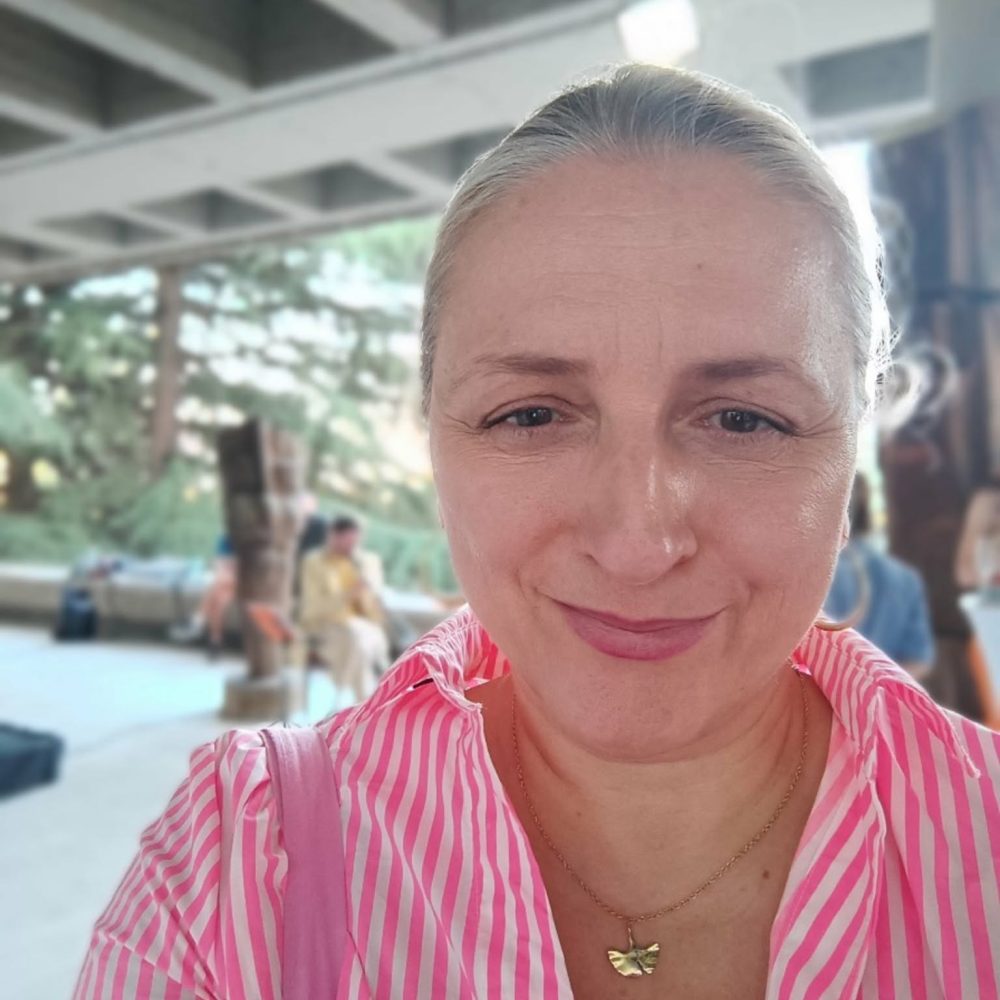
Danche Chalovska
Mentoring as Cultural Capacity Building
Read Full Insight
“
My mentoring methodology is grounded in cultural management, project coordination, and capacity building within the creative and cultural sectors. I support emerging professionals by translating complex cultural, administrative, and policy frameworks into practical knowledge and skills for project development, implementation, and sustainability. My approach emphasizes structured thinking, responsibility, and an understanding of how cultural initiatives operate within broader social, economic, and institutional contexts.
Drawing on my experience in international cooperation and programs such as Erasmus+, I encourage participants to engage with diverse models of practice, institutional environments, and collaborative processes. I view mentoring as a process of guided professional development that connects cultural ideas with operational realities, helping individuals navigate the challenges of cultural work with confidence and adaptability.
Through dialogue, knowledge sharing, and practical engagement, I support the development of organizational, leadership, and project-management skills while fostering critical awareness, professional growth, and the capacity to transform ideas into meaningful and sustainable cultural initiatives.
“
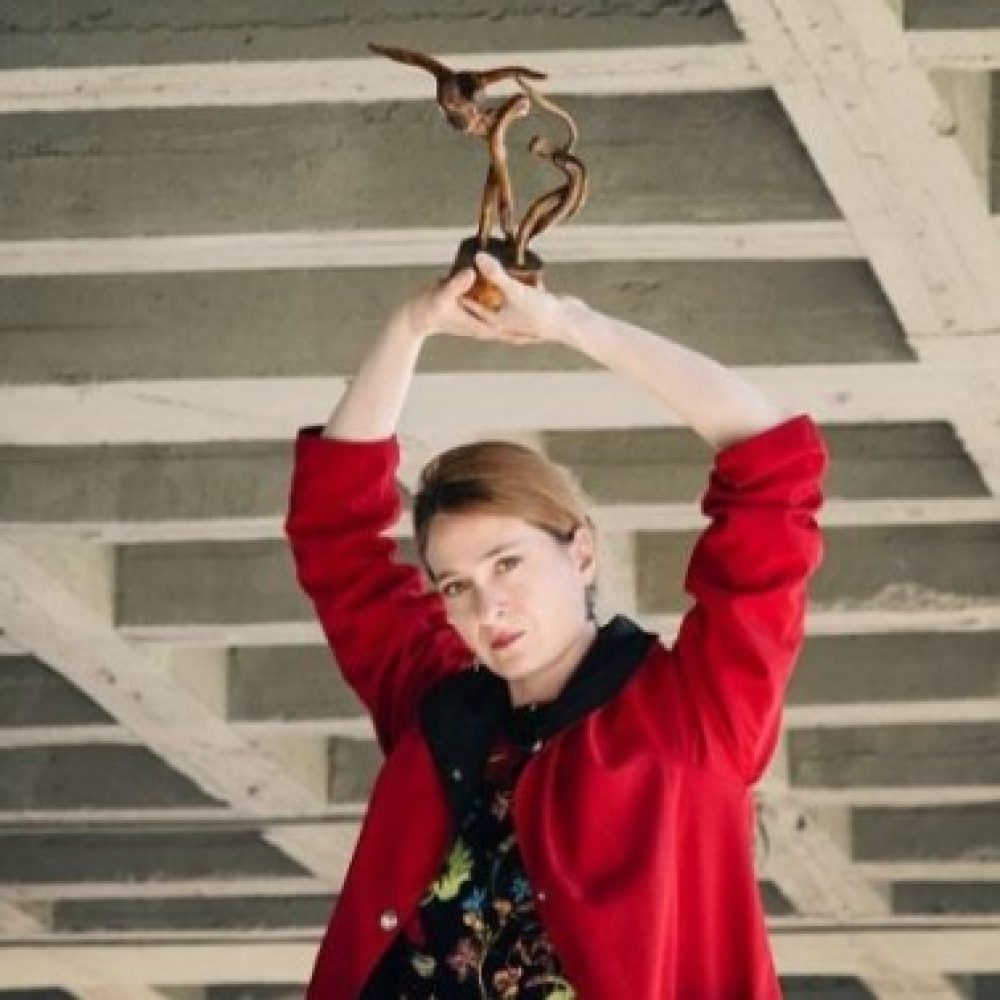
Iskra Shukarova
Mentoring Through Movement, Dialogue, and Embodied Knowledge
Read Full Insight
“
My mentoring methodology is grounded in my practice as a choreographer, performer, educator, and researcher. I approach mentoring as a process of dialogue, experimentation, and critical reflection, where artistic development emerges through embodied knowledge, curiosity, and sustained practice. Rather than providing fixed answers, I encourage participants to question assumptions, expand their perspectives, and develop their own artistic language.
Movement is central to my approach, functioning not only as performance but also as a way of thinking and researching relationships between body, space, memory, and society. Through individual and collective processes, I support artists in strengthening creative confidence, refining research methods, and connecting conceptual inquiry with artistic expression.
I value interdisciplinary exchange and encourage engagement with diverse fields of knowledge and contexts. Mentoring, for me, is a collaborative learning process based on trust, openness, and mutual respect. By integrating artistic research, embodied practice, and critical dialogue, I support the development of independent, reflective, and socially engaged artistic practices.
“
Section 06
Documentation
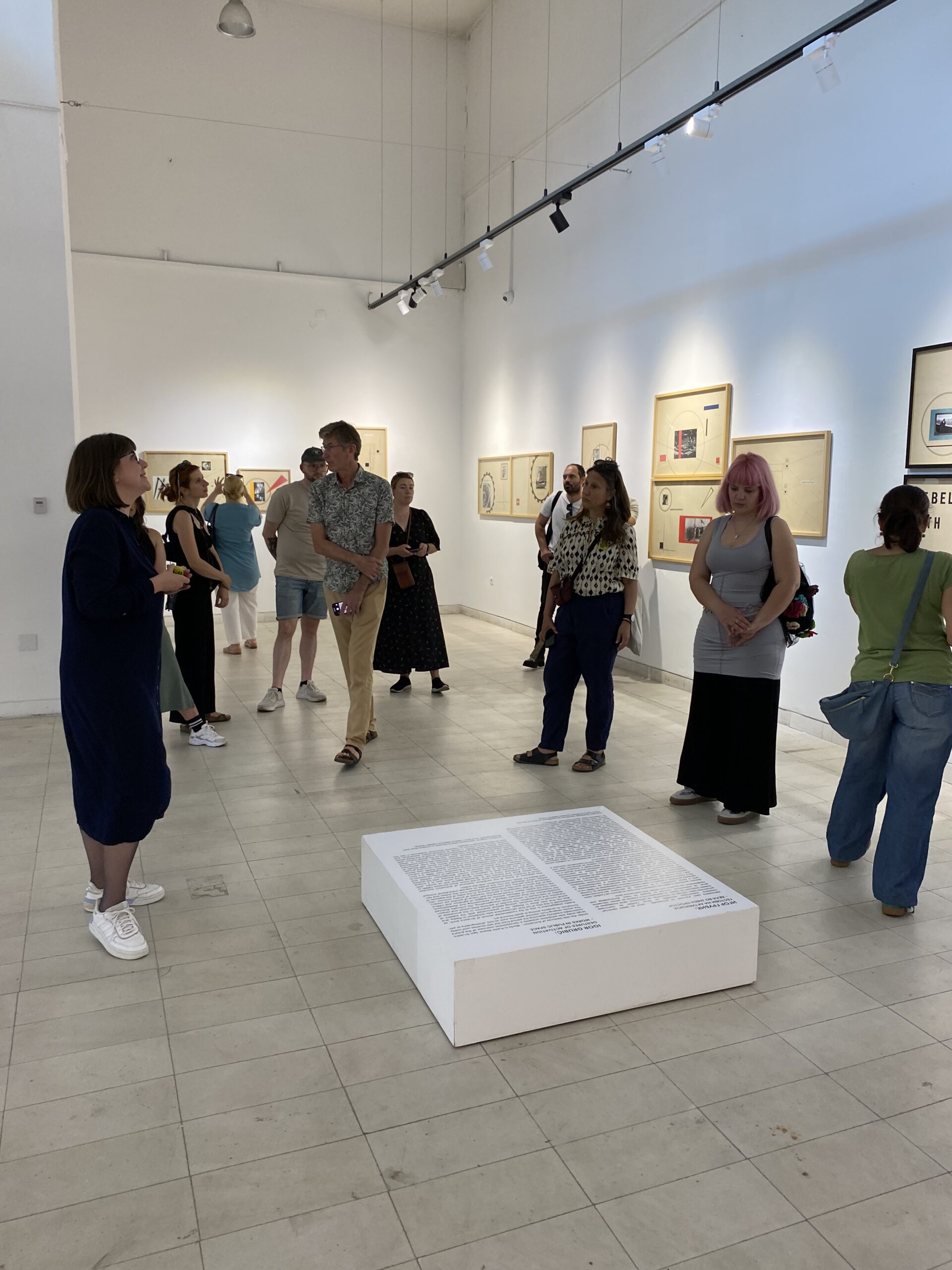
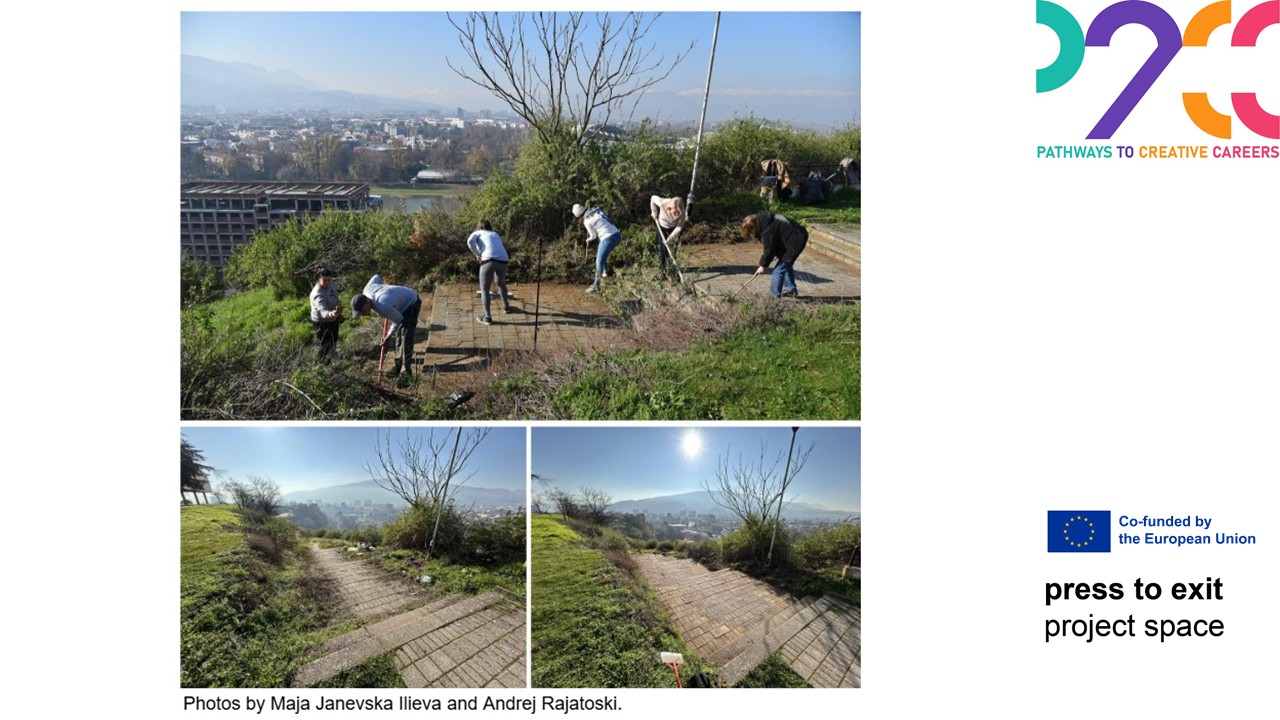
Photo Gallery
Videos
[Video 1 caption]
[Video 2 caption]
Section 07
Online Workshop Output
Workshop Summary
The fourth P2CC Creative Mentoring Exchange workshop, Critical Thinking and Media Literacy, led by Press to Exit Project Space, brought together artists, educators, designers, and cultural practitioners to collectively explore critical thinking and media literacy as situated practices embedded in mentoring, artistic production, and cultural work.
The workshop combined short presentations, group reflection, and facilitated dialogue. It created a shared space for examining how critical thinking operates not as an abstract skill, but as a process of inquiry, attention, and interpretation shaped by specific social, cultural, and institutional contexts.
Read Full Summary
Participants collectively defined critical thinking as a practice of analysing and evaluating information in order to guide judgement and action. It was understood as a form of sustained attention that requires curiosity, openness, and the ability to question assumptions. Media literacy was described as the capacity to critically engage with, interpret, and produce media across different formats, while also recognising how media environments influence perception, communication, and decision-making.
Across the discussion, mentoring emerged as a relational and dialogical practice. Participants emphasised the importance of guiding through questions rather than instruction, supporting mentees in developing independent interpretations and critical awareness. At the same time, attention was given to the role of vulnerability, lived experience, and emotional awareness as integral to reflective practice.
The distinction between individual and collective mentoring formats highlighted their complementary value. One-to-one mentoring enables depth and focused reflection, while group settings foster exchange, comparison, and collaborative learning processes. Across both formats, the creation of safe and open environments was identified as a key condition for meaningful critical engagement.
The workshop concluded with reflections from practice demonstrating how critical thinking and media literacy can inform pedagogical approaches, artistic methodologies, and public communication strategies within contemporary cultural work.
Explore the Full P2CC Guide
Return to the platform to explore all five guide sections developed by the P2CC partnership across Europe.