Section 00
Social Impact of Creative Arts
How creative arts generate change beyond the artwork itself, and why helping young people see and take responsibility for that impact is one of the most meaningful things a mentor can do.
Section 01
Introduction
The following activities are grounded in reflections, discussions and questions that emerged during the online workshop Social Impact of Creative Arts. Rather than offering fixed definitions or measurable outcomes, the workshop approached social impact as an ongoing process of awareness, responsibility and context-sensitive decision-making within creative practices.
Participants highlighted that social impact often becomes visible through small but meaningful shifts: in how people relate to one another, how spaces are used, how questions are raised, and how voices that are usually unheard are given room to emerge. Creative arts were understood not only as finished artworks, but as a mindset and a form of active practice that enables expression, participation and critical thinking in everyday and public contexts.
Read the full introduction
These activities are designed to support mentors and educators in opening space for reflection with young creatives, helping them consider questions such as: why they work in a certain context, who is involved or excluded, what kinds of change their work might enable, and how impact can continue beyond the duration of a project. The focus is not on prescribing themes or methods, but on encouraging long-term thinking, care and attentiveness to social relationships and environments.
All activities are adaptable, require minimal resources and can be used across disciplines. Reflection questions accompany each activity to support dialogue, self-reflection and mentoring conversations around the social dimension of creative work. In this sense, social impact is understood not simply as participation, visibility or a measurable project outcome, but as a relational and often long-term process shaped through how people work together, make decisions and relate to their wider communities.
Section 02
Tools and Resources
Use or Ornament? The Social Impact of Participation in the Arts
François Matarasso’s study explores the social impact of participation in the arts, including personal development, social cohesion, community empowerment and local identity. In mentoring, it can be used as background reading or as a starting point for group discussion about what social impact means, how it appears in practice, and how it can be recognised.
Social Impact Toolkit
This research article maps more than 10,000 studies on the social impact of the arts published between 1990 and 2020. It identifies key areas in which social impact has been researched, including education, community and identity. In mentoring, it can support individual or group reflection on the different ways social impact is understood and help participants connect their own practice to wider research and debates in the field.
Goal Planner for Creatives
This Artsformation report reviews research on socially engaged arts and examines how artists work with social change, participation and communities. It discusses different roles of artists and approaches to socially engaged practice, including questions of collaboration and relationality. In mentoring, it can be used as background reading or to support group discussion about how artistic practice can engage with social issues and contribute to change.
Social Impacts of Participation in the Arts and Cultural Activities
This research report reviews existing evidence on the social impacts of participation in arts and cultural activities, including community identity, social cohesion, self-esteem and education. It can be used as background reading or as a basis for individual or group discussion about different forms of social impact, the evidence behind them, and the challenges of assessing them.
Section 03
Cross-Thematic Resources
WHO – Arts, Health and Wellbeing
This WHO report explores how participatory arts practices contribute to health, emotional wellbeing and social connection...
Details
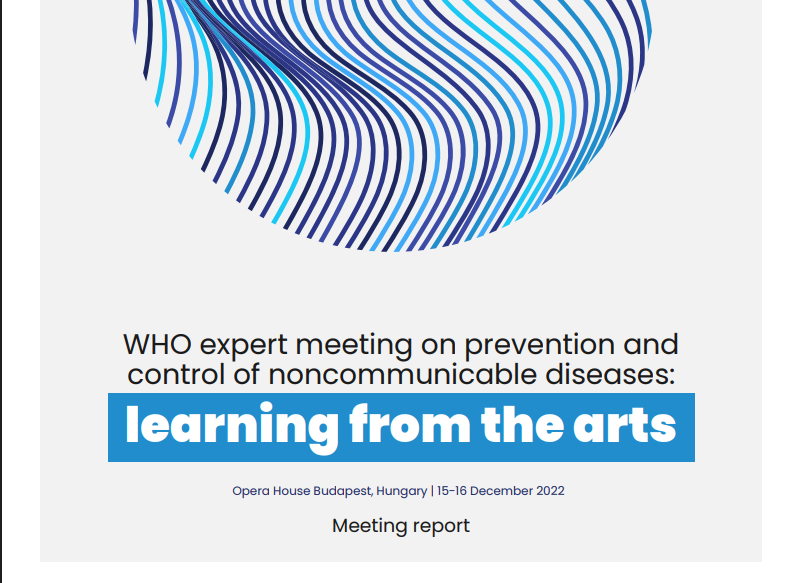
This WHO report explores how participatory arts practices contribute to health, emotional wellbeing and social connection. It highlights that arts-based activities can support mental health, reduce stress, encourage participation and create “cultures of wellbeing” through collective creative experiences. The report is particularly relevant for community-based youth projects, showing how creative engagement can strengthen resilience, inclusion and social cohesion while also supporting behavioural change and active participation.This resource connects social impact with collective care, inclusion and the role of creative participation in supporting wellbeing within communities.
YouCreate Project Guide – Arts and Wellbeing
The YouCreate Project Guide presents practical methods for youth-led creative projects focused on wellbeing...
Details
The YouCreate Project Guide presents practical methods for youth-led creative projects focused on wellbeing, resilience and community participation. The guide connects artistic expression with five “Wellbeing Pillars”: feeling safe, connected, worthy, respected and hopeful. Young people are encouraged to use creative and digital arts to explore challenges in their lives and develop collective “Art-Action” projects that improve wellbeing and social cohesion in their communities. The resource strongly links participatory arts, youth empowerment and emotional wellbeing. It provides a useful example of participatory pedagogy, linking creative practice, youth-led learning and collective care.
Film svima
Film svima is an inclusion-focused project launched in 2016 by Filmaktiv...
Details

Film svima is an inclusion-focused project launched in 2016 by Filmaktiv in partnership with organisations supporting deaf, hard of hearing and visually impaired communities. The project aims to make audiovisual culture accessible while promoting inclusive cultural practices and participation.
Through adapted subtitles and Croatian Sign Language interpretation, Croatian films become accessible to deaf and hard of hearing audiences. The project includes public screenings, educational programmes and the development of an online media library of accessible films.
Since 2016, 71 films have been adapted and presented to more than 5,000 viewers, contributing to greater accessibility, visibility and inclusion in culture and community life. The project offers a practical example of how social impact can be connected to accessibility, inclusion and participation in cultural life.
Section 04
Topic-Related Activities
Workshop Context & Background
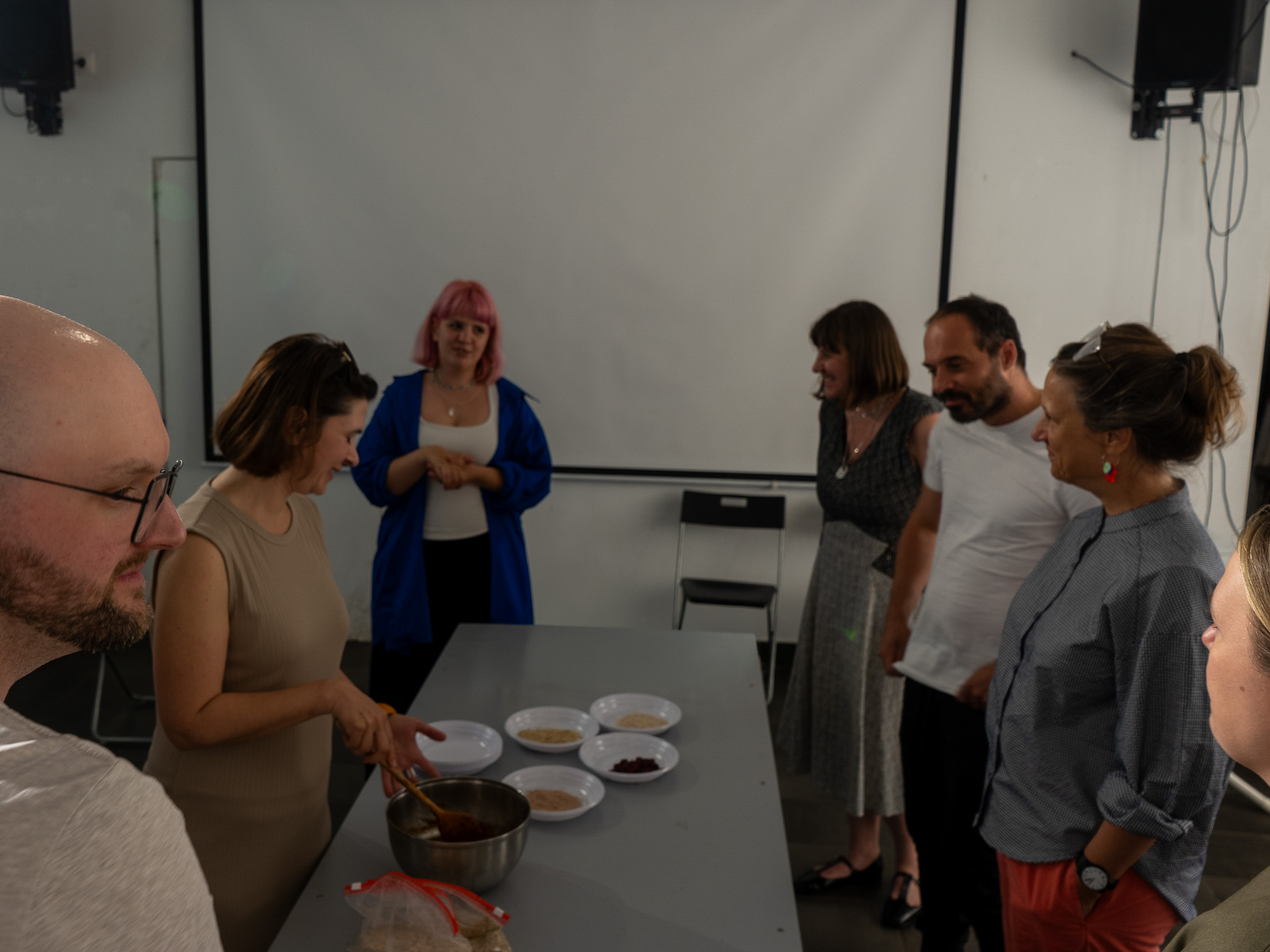
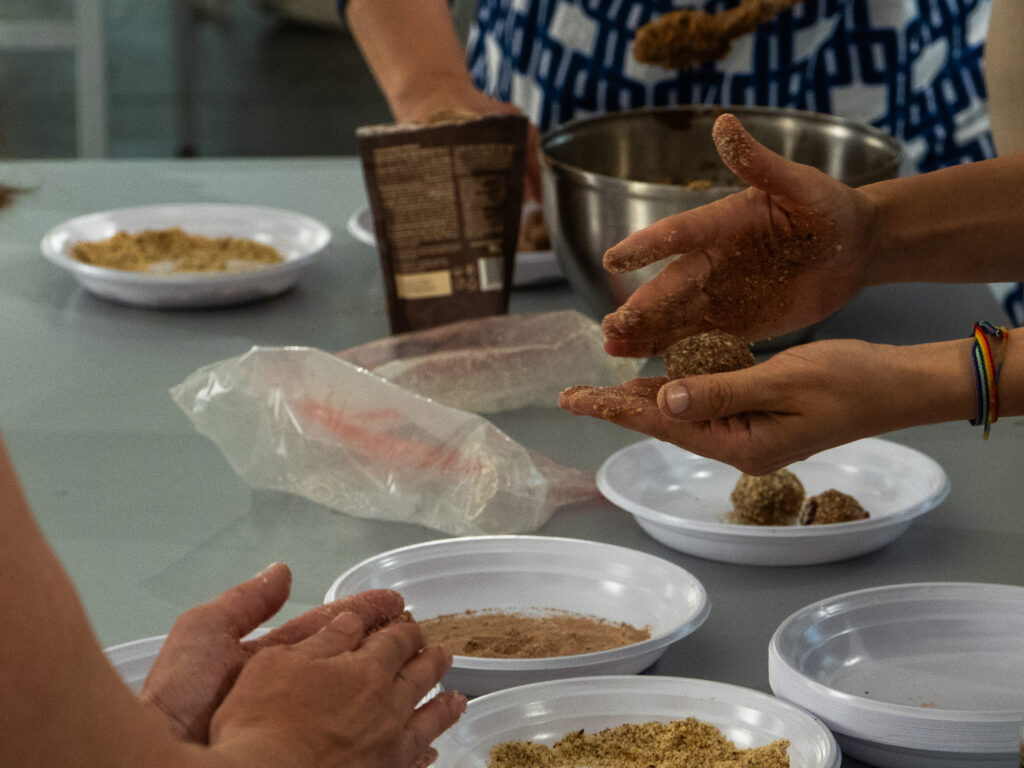
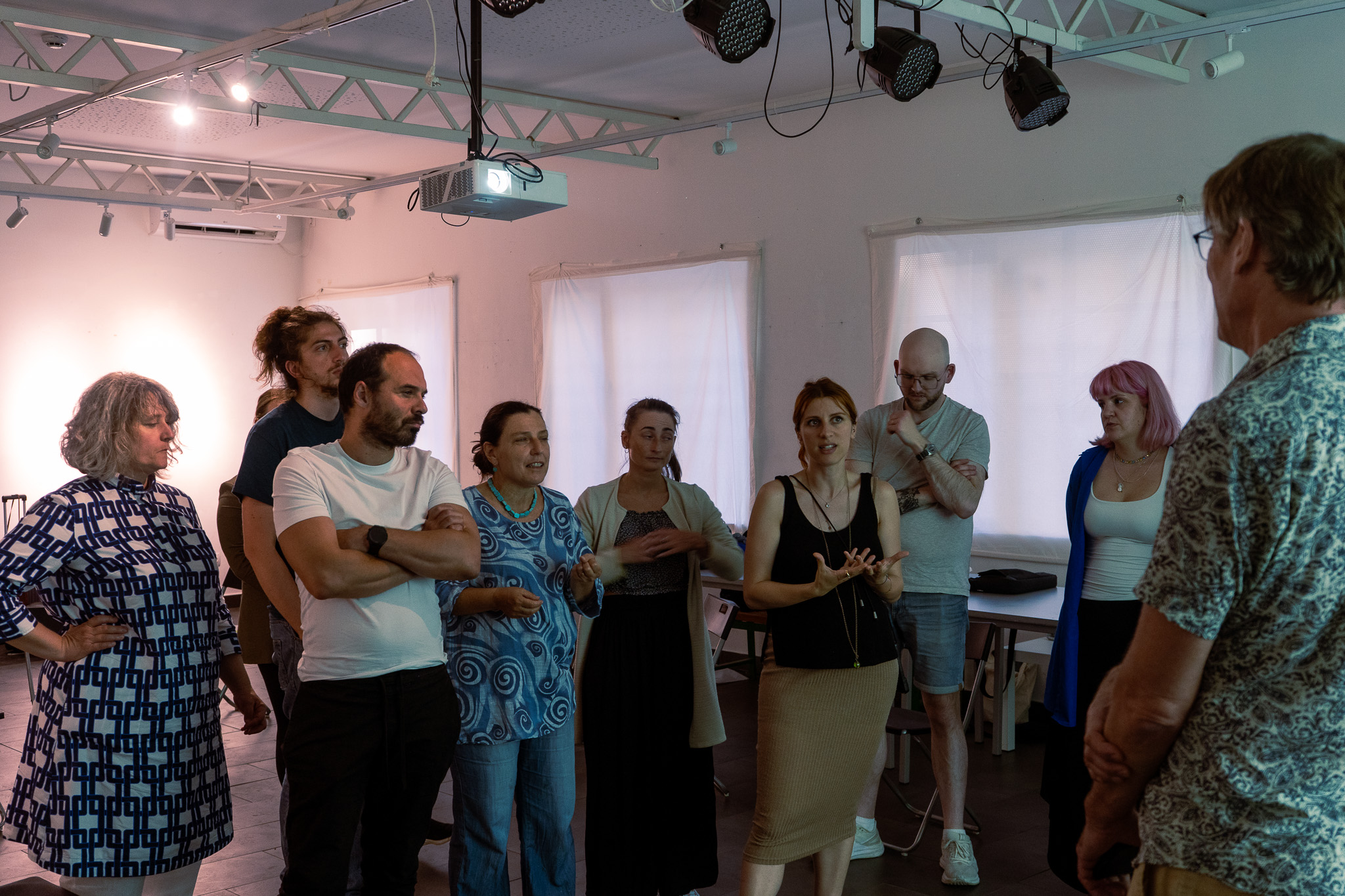
The following activities are designed to address the social impact of creative arts through simple, transferable practices rooted in reflection, dialogue and collaborative creative processes. They respond to the need for clearer ways to approach participation, context and responsibility within creative learning and mentoring environments.
Creative work often unfolds within complex social realities. Artists and young creatives make decisions that influence how people interact, how stories are shared and how spaces are experienced. These activities aim to support mentors and educators in helping participants recognise these dimensions, consider who is involved or affected, and reflect on how creative actions can open space for exchange and understanding. Rather than focusing on artistic outcomes, the activities prioritise awareness, perspective and relationships within a broader social context.
Each activity can be adapted to different group sizes and settings, including non-artistic environments. No specialised equipment is required, and all activities can be facilitated by mentors or educators without formal arts training. Reflection questions are included to encourage individual and collective consideration, helping participants connect their creative practice with its wider social relevance.
Art and Empowerment
Full Activity Details
Participants reflect individually on a moment when a creative activity had a visible impact on someone’s confidence or sense of agency, either their own or that of a young person they worked with.
Steps:
Ask participants to recall and briefly write down one concrete example..
In small groups, participants share their examples and identify what contributed to the sense of empowerment.
Groups map recurring elements such as participation, visibility, choice, collaboration or recognition.
Together, they discuss which of these elements are already present in their own practice and where there may be room for improvement.
The exercise helps make implicit knowledge about empowerment more visible and encourages participants to distinguish between assumed and experienced empowerment.
Adaptation notes:
For larger groups, participants can first work in pairs before sharing key points in small groups or plenary. If participants find it difficult to draw on personal experience, they can use an example from a project they know or have observed.
Reflection Questions
- What elements most contributed to empowerment in the examples shared?
- Where do you already apply these elements in your practice, and where could you create more opportunities for agency?
- How could you create more opportunities for participants to experience agency, recognition or empowerment in your everyday practice?
What Do We Mean by Social Impact?
Full Activity Details
Participants explore different understandings of the social impact of the arts and compare these with their own practice.
Steps:
Individually, participants write down three different meanings or examples of “social impact of the arts” based on their own experience.
In small groups, they compare their definitions and identify similarities, differences and contradictions.
Each group selects one or two definitions that feel most relevant to their work.
In plenary, participants discuss which understandings are grounded in practice and which remain more abstract or aspirational.
The exercise helps reveal how differently social impact may be understood and shows where a lack of shared language can create confusion in creative or mentoring work.
Adaptation notes:
For participants with limited experience in socially engaged arts, the facilitator can provide a simple example of a creative project involving a community or group. The activity can also be used at the beginning and end of a programme to see whether participants’ understanding has changed.
Reflection Questions
- Which definitions felt most grounded in experience?
- Where do misunderstandings or assumptions about social impact appear in your practice?
- How could a clearer shared understanding of social impact influence the way you plan or discuss your creative work?
Recognising Social Outcomes
Full Activity Details
Participants review a completed or ongoing creative project and identify social changes or effects that developed alongside the artistic process.
Steps:
Choose one project and briefly map its main stages.
Identify moments when something changed in relationships, participation, confidence, dialogue, access or engagement.
Discuss which changes were intentional and which emerged unexpectedly.
Consider what contributed to these changes, including collaboration, participation, facilitation or the local context.
Identify which outcomes were visible and which were more difficult to recognise or document.
The activity shifts attention away from artistic outputs alone and helps participants notice the social value that may emerge during the process, not only at the end of a project.
Adaptation notes:
Participants can work individually on their own project or in small groups around a shared example. For ongoing projects, the activity can be used as a mid-process reflection rather than an evaluation exercise.
Reflection Questions
- Which social outcomes were most visible, and which emerged unexpectedly?
- Which changes are hardest to recognise, document or explain?
- What could help you notice and document social changes while a project is still in progress?
Identifying Support Gaps
Full Activity Details
Participants identify areas where they feel confident when working with the social dimensions of creative practice and areas where they need further support.
Steps:
Individually, participants map areas where they feel confident, such as facilitation, participation, group work, inclusion or community engagement.
They then identify areas where they feel less prepared, for example conflict, accessibility, evaluation, power dynamics or working with different communities.
In small groups, participants compare their maps and look for recurring gaps.
Each participant selects one area they would like to strengthen and identifies one possible next step, resource or form of support.
The exercise helps mentors and practitioners recognise where additional learning or support may be needed in order to work more responsibly with social impact.
Adaptation notes:
The activity can be done anonymously using sticky notes if participants are uncomfortable discussing gaps openly. It can also be used by a team to identify shared training needs.
Reflection Questions
- Which support gaps appear most frequently across the group?
- What could help address these gaps in practice?
- Which area would you most like to strengthen, and what kind of support would help you do that?
Participation or Instruction?
Full Activity Details
Participants examine how decisions are made within creative workshops and consider the balance between facilitation and participant agency.
Steps:
Choose a real or hypothetical workshop involving young people or community participants.
Map the main moments where decisions are made, such as choosing the topic, method, roles, outputs or ways of presenting the work.
Mark which decisions are made by the facilitator and which are made by participants.
Identify one point where participants could realistically have more agency.
Discuss what might change if decision-making were shared differently.
The exercise helps participants reflect on power dynamics within creative processes and distinguishes participation from simply taking part in an activity designed by someone else.
Adaptation notes:
Participants can analyse their own workshop plan, work in pairs on a case example, or compare two different approaches to the same activity. The facilitator should emphasise that increasing participation does not mean removing all structure.
Reflection Questions
- Where is control concentrated in your current practice?
- What could change if participants had more influence over decisions?
- Where could you realistically share more decision-making with participants without losing necessary structure?
Section 05
Mentor Insights
Tanja Blašković
For me, the biggest social impact comes from creating a safe space
Read Full Insight
“
What is one thing you have found works well when mentoring young people in relation to this topic (social impact)?
For me, the biggest social impact comes from creating a safe space for creative exploration and building connections between mentees in group settings. This helps not only in creating, but also in imagining the broad spectrum of what creative careers can be, and in putting into perspective how someone’s creative work can influence people and the spaces around us.
I usually approach this by introducing quick creative exercises at the beginning of a mentoring process. These include things like experimental drawing within very short timeframes (1–2 minutes), based on very specific prompts. Some prompts are concrete, such as drawing portraits of each other, while others are more abstract, like inclusion or happiness. The short timeframe makes the process more fun and spontaneous, encouraging participants to explore even complex themes intuitively.
All of these quick drawings can then be used as a starting point to explore specific themes more deeply.
“
Kristijan Mamić
i found that putting things in perspective and creating safe space for personal expression works well
Read Full Insight
“
In my experience with working on permaculture workshops for young people (age 8 to 11) i found that putting things in perspective and creating safe space for personal expression works well hand in hand. With me, there are two other mentors. There are usually eight kids per workshop. In total workshop lasts 5 hours.
During two day workshop we start to create trust in between kids themselves and in between mentees and mentors. We use jokes and funny little scenes to create relaxed athmosfere. We like to use songs and kids ways of talking to create safe space. We talk about our life, our daily strugles. Kids feel that they can express their feelings. Second thing i mentioned was putting things in perspective and context. by that i mean talking about small scale (microorganisms in soli) and talking about big scale (universe and our place as planet earth in that universe). In between those two extremes we manage to help kids to see how important it is to guard nature and life in general.
“
Section 06
Documentation
Photo Gallery
Videos
[Video 1 caption]
[Video 2 caption]
Section 07
Online Workshop Output
Workshop Summary
Summary workshop description goes here
Read Full Summary
More detailed description goes here
Explore the Full P2CC Guide
Return to the platform to explore all five guide sections developed by the P2CC partnership across Europe.