Section 00
Inclusion and Equality
Why inclusion and equality aren’t just ethical commitments in creative mentoring, and how the conditions we create for young people directly shape what creativity itself becomes possible.
Section 01
Introduction
Creativity flourishes in environments where individuals feel secure, valued, and free to share their unique perspectives. In arts education and mentoring, inclusion and equality are not just aspirational values – they are the very foundation that allows creativity to emerge and grow. When everyone has equal access and truly feels they belong, the conditions are set for authentic creative expression and collaboration.
Inclusion in mentoring creative youth can be described as actively creating an environment where all young people feel welcomed, respected, and valued, regardless of their background, abilities, or identities. Equality in this context means ensuring that all have equal access to the opportunities, support, and resources within the mentoring program. It is about treating everyone fairly and providing each young person with what they need to succeed.
When young people feel included and see that their differences are acknowledged and respected, they are more likely to take creative risks, share their ideas, and collaborate meaningfully with others. A truly inclusive environment encourages exploration, experimentation, and the breaking down of internal and external barriers that may otherwise inhibit self-expression. Equality ensures that every voice can be heard and that no one is left behind, making the creative space richer, more diverse, and more dynamic.
Read the full introduction
In a broader educational and socio-cultural context, fostering inclusion and equality through the arts has the power to build bridges between individuals and communities. Art becomes not only a means of personal expression but also a catalyst for dialogue, empathy, and social cohesion. It can challenge stereotypes, open minds, and help participants envision new possibilities for themselves and society.
While these concepts are closely connected, they have distinct meanings in creative mentoring. Accessibility refers to removing practical, physical, digital, and communication barriers so that everyone can take part. Inclusion means creating an environment where participants feel respected, valued, and able to contribute as themselves. Participation goes one step further by ensuring that young people actively influence activities, express their ideas, and take ownership of the creative process. Together, these principles create the conditions for meaningful engagement and equal opportunities for creative development.
At Folkuniversitetet, our commitment to inclusion and equality is rooted in our belief that creativity is a universal human capacity. By upholding these values, we help ensure that creative spaces are accessible, inspiring, and transformative for all, enabling every participant to contribute their story, develop their talents, and connect with others in meaningful ways. In this way, inclusion and equality are not just educational priorities; they are the very foundation on which lasting creativity and cultural vitality are built.
Section 02
Tools and Resources
Gender equality strategy 2026-2030
The European Commission adopted the Gender Equality Strategy 2026-2030 on 5 March 2026. The strategy puts forward concrete actions to embed gender equality into every aspect of life, both online and offline, from education and health to work and leadership. It enlarges the scope of the previous strategy by covering all the principles of the Roadmap for Women’s Rights, which was endorsed by all Member States in 2025. In addition to ensuring that recently adopted gender equality legislation is duly implemented, the strategy tackles new threats such as gender-based cyberviolence, anti-gender narratives and AI-related risks, which particularly affect women.
Towards gender equality in the cultural and creative sectors
This report focuses on the role that culture plays in promoting gender equality and, more importantly, how to achieve gender equality within the cultural and creative sectors (CCS).
Inclusive arts practice: reaching new understanding of what is truly inclusive
Alice Fox’s research at the University of Brighton is establishing a deeper understanding of truly inclusive practice, evolving the concept of expanded listening, a way of being with and responding to another person.
Faculty Advancing Inclusive Mentoring
The FAIM Resource Center supports faculty and their mentees in their development and advancement of mentee-centered and strengths-based mentoring practices within graduate education and the professoriate. The FAIM framework comprises a mentoring philosophy, key principles, and practical tools and resources that benefit both mentors and mentees.
Mentoring for inclusion: A scoping review of the litterature
This article explores and summarizes the characteristics and findings in Norwegian research on mentoring for inclusion, using a scoping literature review. Mentoring matches younger or less experienced individuals with non-parental mentors to provide support and promote skills, personal development, and/or attainment of specific goals, such as employment.
Mentor handbook – for mentors supporting students in higher education
With this handbook, the National Agency for Special Needs Education and Schools (SPSM) and Stockholm University aim to provide support by providing practical advice on how mentors can approach the mentorship. The handbook includes checklists and exercises that can be printed or saved to be filled out digitally.
Inclusive Mentorship Skill Development
Inclusive mentoring refers to a type of mentor-mentee relationship in which both parties learn from each other and benefit from the relationship, and is intended to lower the power imbalance and make the relationship more accessible and equitable to people from all backgrounds and identities. In this model, mentors connect with the student around their different identities. This is one distinct, thematic section from the guidebook ARC-Learn Practitioner Guidebook: Practical Considerations for Implementing an Alternative Model of Undergraduate Research Experience.
Section 03
Cross-Thematic Resources
DISCO Learning Platform
The EU Erasmus DISCO project aims at improving the digital competences...
Details

The EU Erasmus DISCO project aims at improving the digital competences of guidance and career counselling professionals facing radical challenges and changes in their practice through tools, learning content and activities.
Learning4All
The Erasmus+ project Learning For All aims to improve access to adult education opportunities...
Details
The Erasmus+ project Learning For All aims to improve access to adult education opportunities for vulnerable groups, particularly migrants, refugees, and low-skilled adults. Through digital tools, outreach methodologies, and capacity-building resources, the project supports adult education providers in creating more inclusive, accessible, and culturally responsive learning environments.on
Peer4Inclusion
The Erasmus+ project Peers4Inclusion aims to increase the social inclusion of young people ...
Details
The Erasmus+ project Peers4Inclusion aims to increase the social inclusion of young people with disabilities through peer-led online workshops that use digital tools and experiential learning methods. The project develops accessible learning resources, an online platform, and peer-to-peer training approaches to help youth organisations combat ableism and promote inclusive participation in socio-educational activities.
Section 04
Topic-Related Activities
Workshop Context & Background
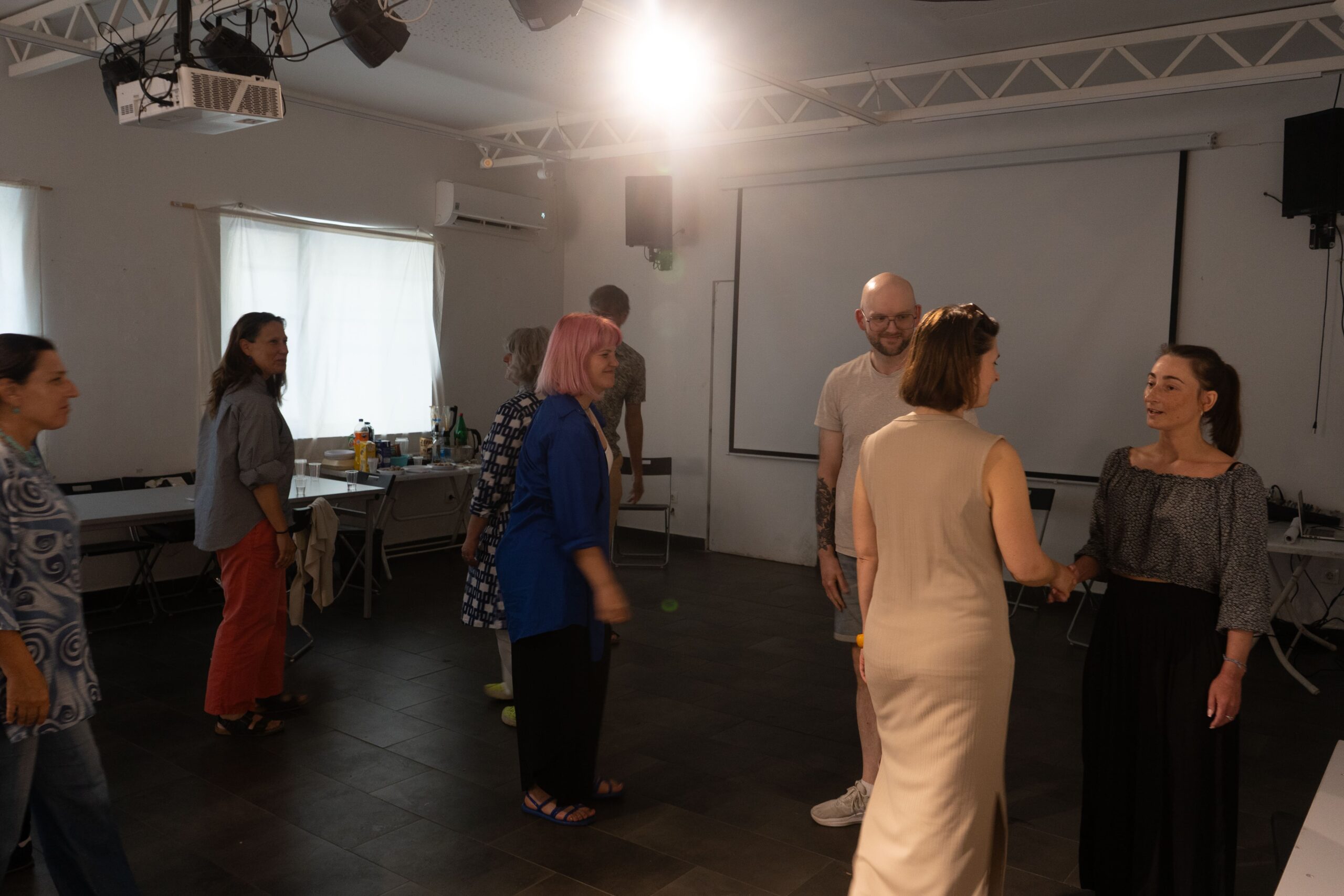
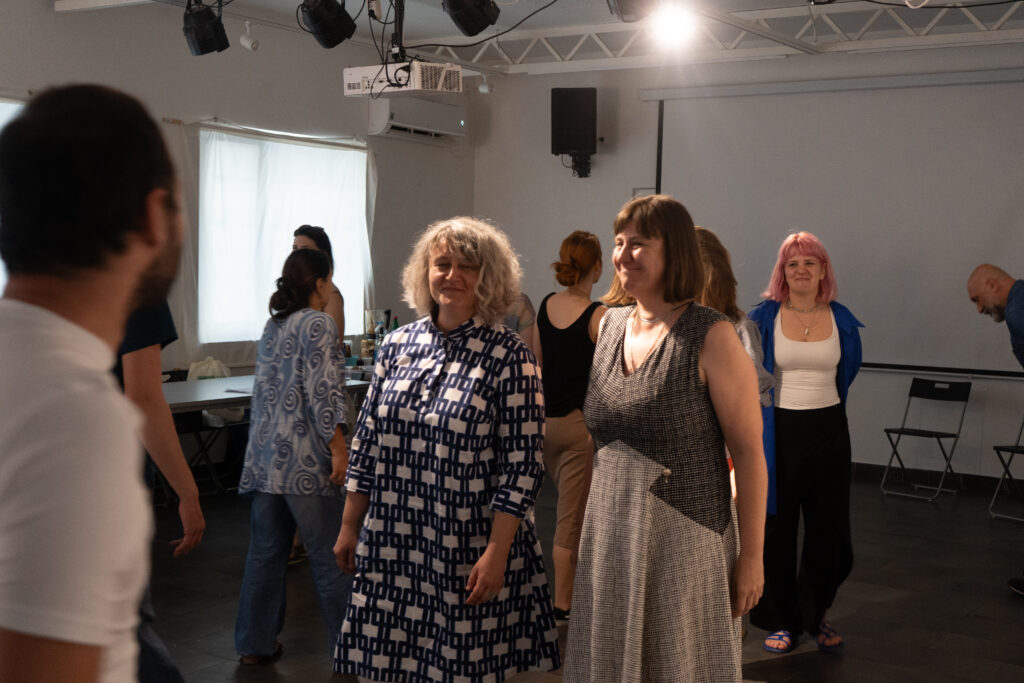
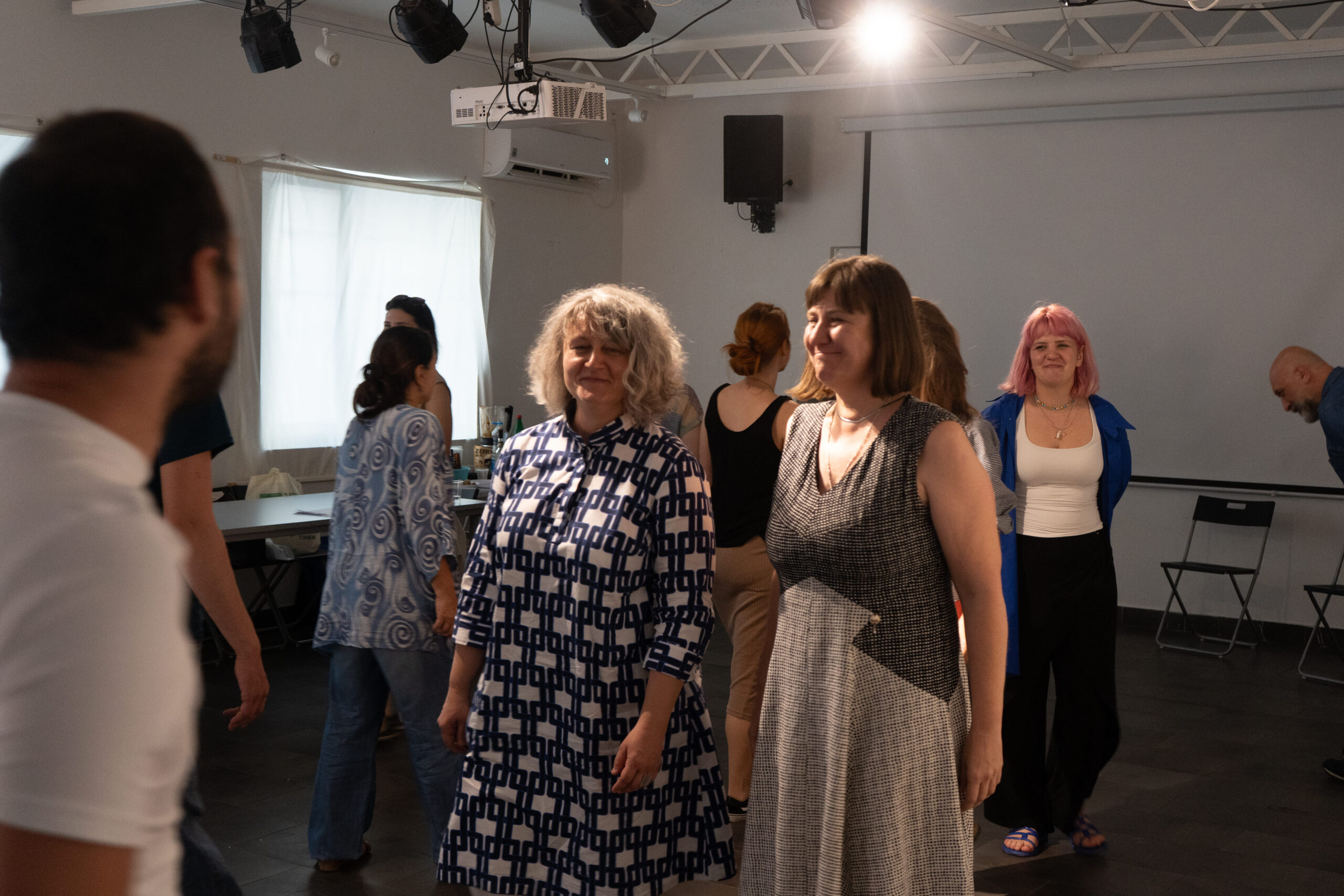
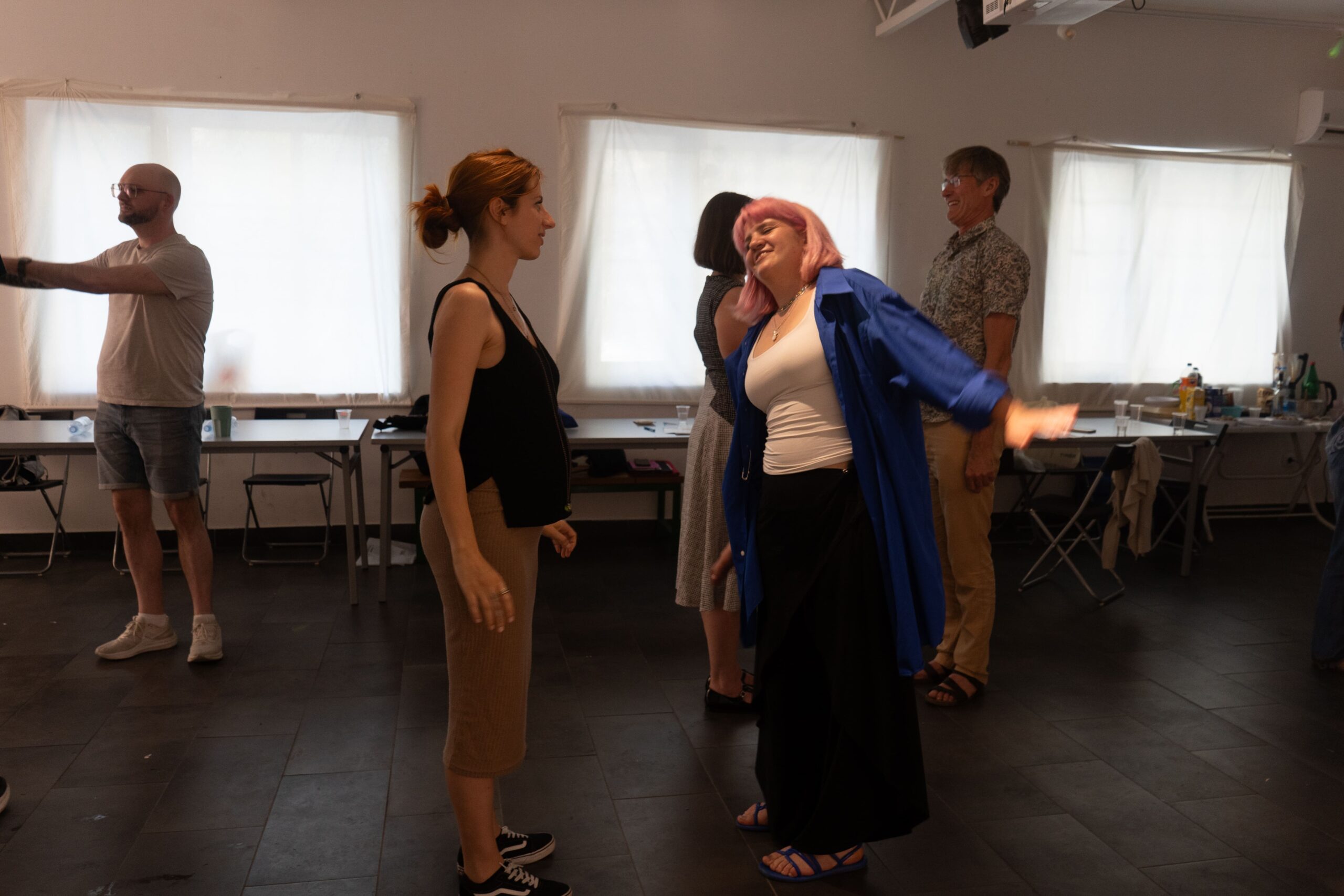
The following activities draw upon the co-creative and participatory methods developed through workshops facilitated by Skopje’s Lab (SkopjeLab), in dialogue with insights gathered during our own workshop sessions. An in‑person workshop held in Skopje focused on building group awareness, trust, and collective presence as foundations for collaboration. Through embodied and reflective exercises, participants explored how attention to self and others can support inclusive and creative processes.
Activities such as Walking with Awareness and Mirroring Movements were used to introduce nonverbal communication, observation, and shared responsibility within the group. These exercises encouraged participants to tune into group dynamics, experiment with leadership and followership, and experience co-creation on a physical level. This was further developed through the Living Sculptures activity, where participants collectively shaped temporary artworks, highlighting the value of individual contributions within a shared outcome.
The workshop concluded with reflective practices focused on goals and aspirations, using open questions and Post-it note exercises to surface individual and collective intentions. Together, these activities established a common ground for future sessions, creating the conditions for trust, inclusion, and collaborative learning that underpin the work described in the following sections.
Walking with Awareness
Full Activity Details
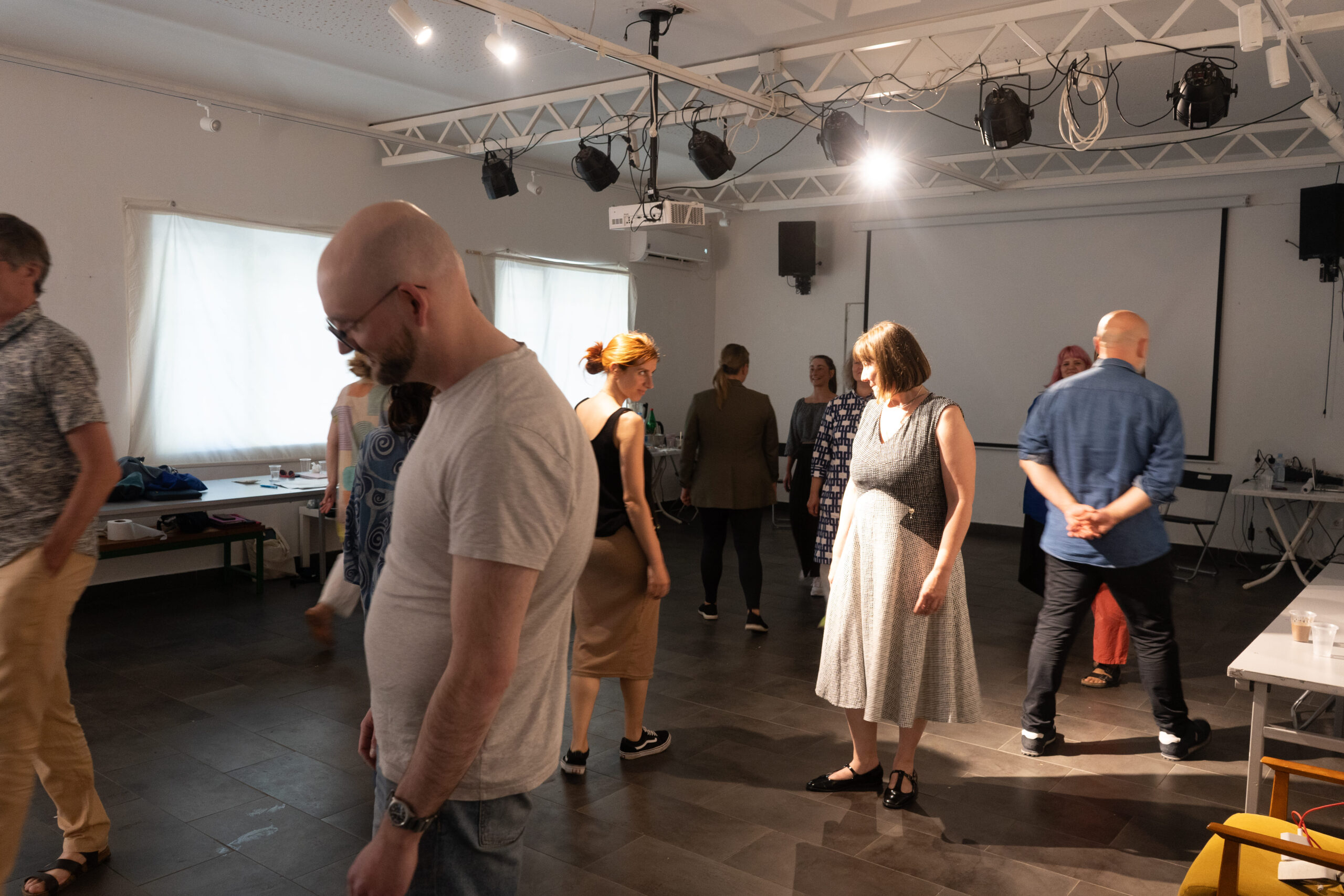
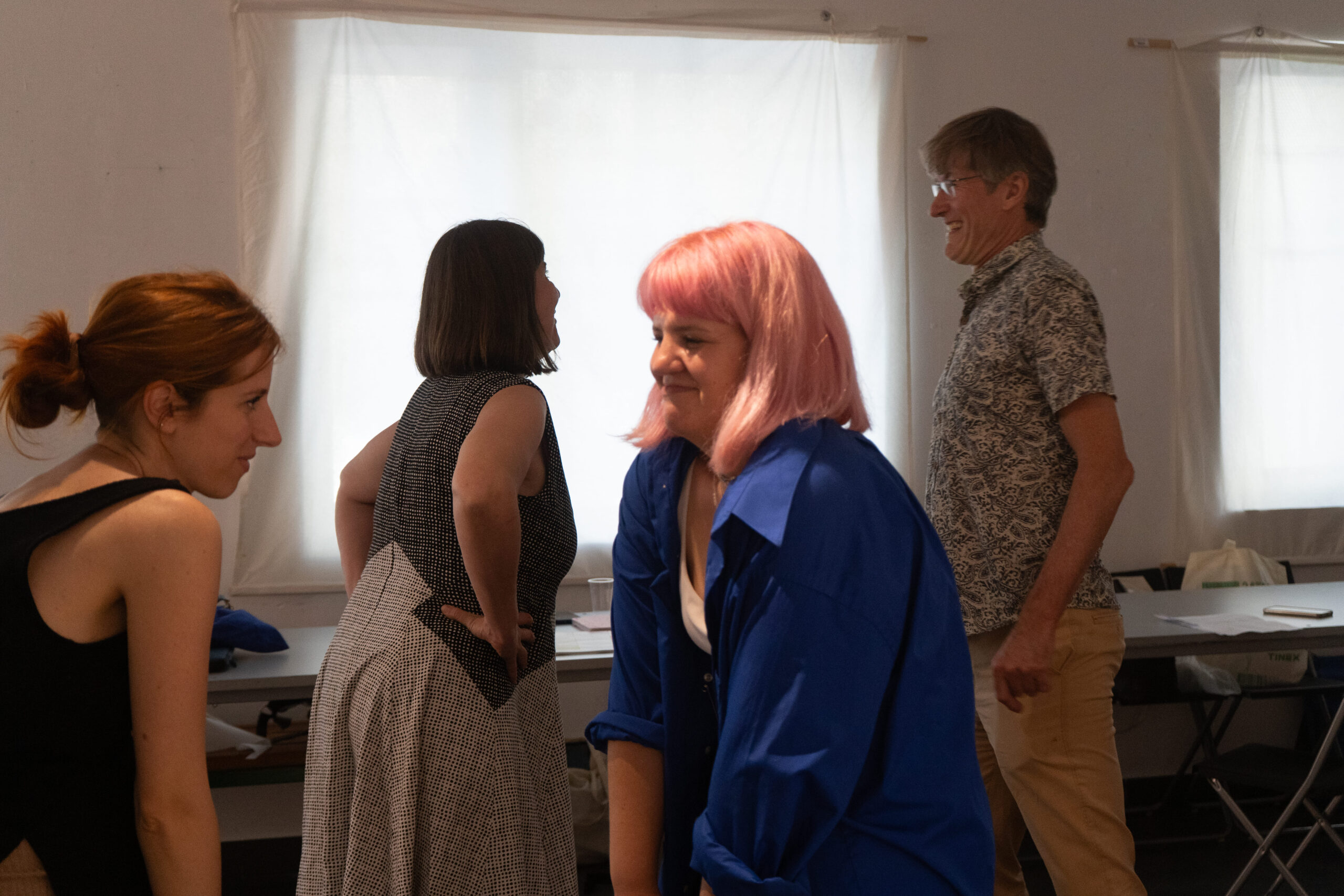
This activity requires a spacious room where participants can move freely without bumping into each other and can be used with groups of various sizes. Ask everyone to spread out and begin walking quietly around the room, using the entire space. Invite participants to imagine that they are all standing together on a raft, which would tip over if it is not balanced. This means they need to pay close attention to their own movements and to where others are in the space.
The participants should not talk during the activity; the focus is on moving with awareness and observing others. As leader, observe and assist if needed. After a few minutes, introduce the next step: when two people make eye contact, they stop in front of each other and hold eye contact for a few seconds before moving on and continuing to walk. Allow everyone to try this several times with different people. To develop the exercise, add simple greetings by for example shaking hands, touching elbows or standing side-by-side and gently leaning against one another for a moment before continuing. New tasks keep up the engagement for the participants.
The purpose of this activity is to develop observation, focus, and nonverbal communication skills, while also fostering coordination, and awareness of yourself and others. It can used with groups on multiple occasions, as it awakens the participants’ senses and creates the conditions for upcoming sessions by allowing everyone to see and acknowledge each other. he activity can be adjusted for participants with different mobility levels by reducing movement speed, using seated versions, or adapting the space. Participants who feel uncomfortable with direct eye contact may instead acknowledge each other through gestures or shared objects. Smaller groups may benefit from longer reflection periods, while larger groups can be divided into smaller circles.
Reflection Questions
- How did it feel to make eye contact with different people as you walked around the room?
- What did you notice about yourself or others when you communicated without words?
- Did you feel more aware of the group or connected to others after this activity? Why or why not?
Mirroring Movements
Full Activity Details
This activity is designed for two people but can be adapted for larger groups. You will need an empty space where everyone can move freely and see each other clearly.
Start by forming pairs. As mentor, considering assigning pairs intentionally to encourage new connections. One person in each pair is assigned leader and begins to make gentle movements, such as hand gestures, simple dance steps, or facial expressions. The other person mirrors these movements as precisely as possible, focusing on following the leader’s pace and style. After a minute or two, switch roles so both have the chance to lead and follow. If you are working with a larger group, form new pairs and repeat the activity. Once everyone is comfortable with mirroring, you can develop the exercise by encouraging shared leadership. Instead of having a designated leader and follower, both partners move together, responding to each other’s movements in the moment.
The aim is to co-create the movement sequence, letting the distinction between leader and follower dissolve. This approach fosters communication, equal participation, and a sense of inclusion. For larger groups, several pairs can work at the same time in the same space, or the whole group can try moving together, focusing on awareness and collective creation.
Participants can mirror movements while seated or use only upper-body gestures if physical movement is limited. Those who communicate more comfortably through non-verbal expression can focus on facial expressions, hand movements, or the use of simple objects instead of full-body movement. Pairing participants thoughtfully and allowing them to choose partners can help create a greater sense of safety and trust, particularly in diverse groups.
Reflection Questions
1. How did it feel to lead and to follow? Was one easier or harder for you?
2. What did you learn about communicating and connecting with your partner through movement, especially when sharing leadership?
3. Was there anything in this activity that made you think about including everyone’s ideas?
Living Sculptures
Full Activity Details
This is a dynamic group activity where participants use their bodies and imagination to create a collaborative artwork. The activity begins with everyone walking freely around the room. At any moment, one person initiates by stopping and taking a pose with their body, becoming a human sculpture. The rest of the group notices, gradually stops, and one by one joins in, each adding their own pose to the growing sculpture. The participants relate to each other’s poses, creating a unified group artwork.
Once the group has built a complete, interconnected arrangement, everyone breaks apart and resumes walking around the space. Thereafter, another participant decides to stop and take a new pose, and the process is repeated, resulting in a different group creation each time. The facilitator can further develop the exercise by introducing a theme for each round, such as “nature,” “emotions,” or concepts related to an ongoing art project. This exercise can also be used to explore elements such as composition, balance, and spatial relationships within a creative process.
Living Sculpture encourages creativity, collaboration, and spontaneous expression. Each participant contributes and help shape the final artwork, highlighting the value of every individual’s input. There is no right or wrong way to join; the focus is on collective creation and respecting each person’s ideas and interpretations. Through this activity, participants experience the power of working together, fostering a sense of unity, inclusion, and shared accomplishment.
The activity can be adapted by allowing participants to contribute using seated poses, hand gestures, facial expressions, or objects rather than full-body positions. Mentors may introduce themes gradually or provide visual prompts to support participants who benefit from additional structure or processing time. In larger groups, creating smaller sculptures can ensure that everyone has sufficient space and opportunities to contribute.
Reflection Questions
1. How did it feel to contribute your own pose to the group sculpture, and what did you notice about how your idea connected with others?
2. In what ways did the group respond to and incorporate each person’s individual expression? Did you feel included and seen in the final creation?
3. Did you notice any creative ideas that surprised or inspired you?
Exploring Goals and Aspirations: Open Questions & Post-it Exercise
Full Activity Details
Understanding each mentee’s creative aspirations and goals is essential for offering tailored support. Early in the mentoring process, take time to get to know participants by asking open questions such as:
What do you want to start doing?
What do you want to stop doing?
What do you want to do more?
What do you want to do less?
These questions help spark reflection and conversation about personal development, and can be adapted to the group’s needs. Another engaging way to explore group goals is the Post-it Note Exercise.
Give each participant a stack of post-it notes and a pen. Set a short time limit and ask everyone to write down as many goals or wishes as possible, one per note. These could include skills they want to learn, techniques to explore, or areas for growth. Emphasize that spelling and handwriting do not matter; what’s important is the idea.
Participants then stick the notes on themselves and walk around the room, reading each other’s notes. If someone finds a goal that resonates, they may take that note and add it to their own collection. After a few minutes, gather in a circle and have everyone read out the notes on their body.
This activity helps the group discover shared aspirations, gives everyone a voice, and provides the mentor with valuable insights for guiding the mentoring process. Notes can be anonymous, and there are no right or wrong answers.
Participants should be offered multiple ways to express their ideas, including speaking, writing, drawing, or using symbols, depending on their communication preferences and literacy levels. Those who prefer privacy may submit anonymous notes or discuss their reflections individually with the mentor before sharing with the group. In mixed-ability groups, mentors can simplify the questions, provide examples, or allow extra reflection time to ensure everyone can participate meaningfully.
Reflection Questions
1. Which goals or aspirations surprised you the most, either your own or those shared by others, and why?
2. Did you notice any common themes among the group’s goals? What might this mean for your work together?
3. What support do you think you need from the mentor or group to work towards your goals?
Section 05
Mentor Insights
Mats Norrgård
Musical Growth Without Limits
Read Full Insight
“
Mats Norrgård is a music teacher and an active composer for video game music, who has created music in many different genres, ranging from orchestral pieces to pop and metal. He has worked as a music teacher for 17 years, teaching young people in schools, and today he supports individual mentees with vocal development and songwriting processes.
Mats highlights that one of the most central aspects of inclusive mentorship is not making assumptions but meeting each person without prejudice and creating an environment characterized by openness and lack of preconceptions. The mentorship always begins with a process of relationship building, where the mentees inspirations, goals, preferred ways of working, and special needs are identified. Based on this, suggestions for the structure are presented, which they agree upon together.
During the mentorship, follow-up questions are asked to ensure that the person is satisfied with the current approach or to identify any adjustments that need to be made. For example, when a young songwriter felt overwhelmed by composing a complete piece, Mats divided the process into smaller creative tasks, beginning with rhythm and melody before introducing lyrics. This gradual approach increased the mentee’s confidence while maintaining creative ownership of the work.
Mats says one should be sensitive to each student’s abilities but also dare to challenge them. He believes it is important to set learning objectives beyond what the person already knows – to quickly identify new goals and provide the person with tasks and support that help them reach those goals, which may be beyond what the mentee initially thought was possible.
“
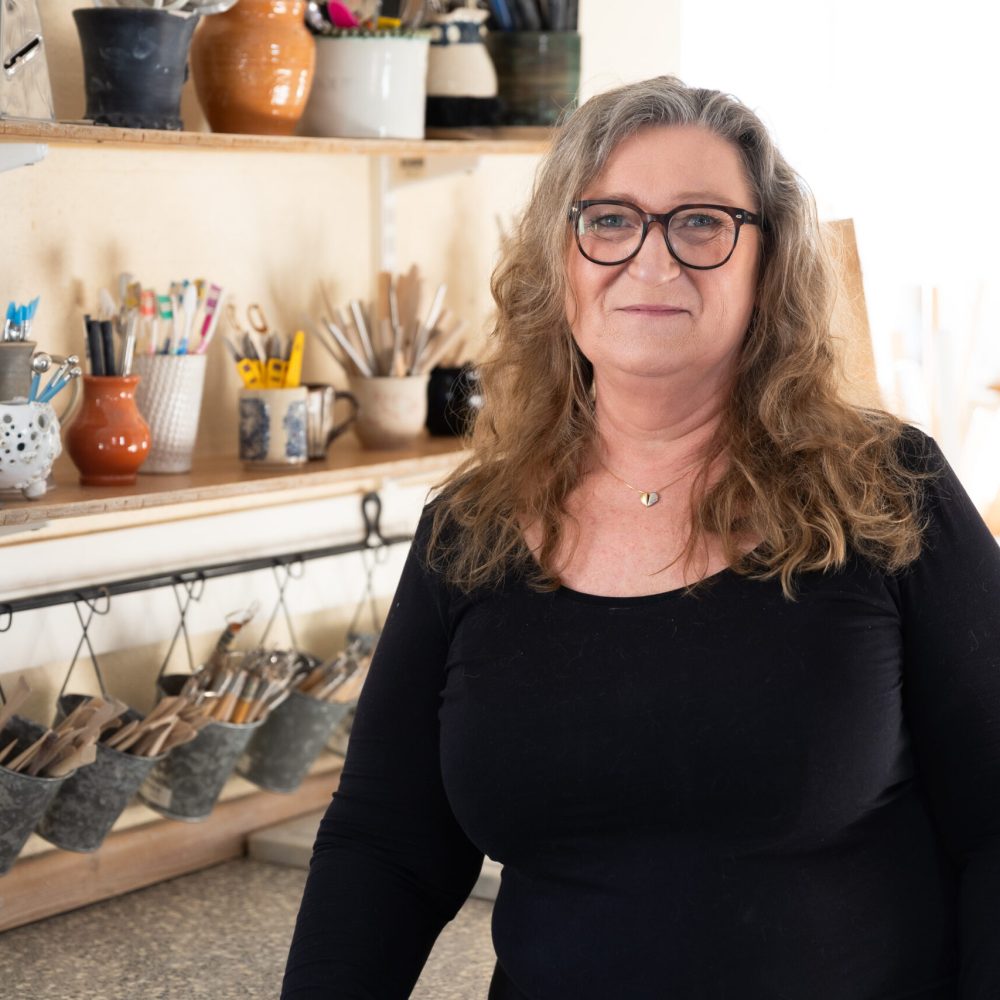
Ingela Bäckman
Safe Spaces for Creative Expression
Read Full Insight
“
Ingela Bäckman is a ceramic artist, sculptor, and educator with over 20 years of teaching experience. In addition to her own classes, she serves as course coordinator for arts and crafts at Folkuniversitetet.
Ingela explains that inclusion and equality are fundamental principles throughout all her teaching, and that a structured and inclusive approach helps create a sense of security for participants, something especially important when working with groups with special needs. By preparing materials in advance and ensuring that everyone works with the same technique, all participants are given an equal starting point, which helps reduce stress and feelings of exclusion. Clear instructions and a consistent working method foster calm and a sense of community within the group, while also supporting those who need extra structure. She also varies the creative environment offering both quiet and social spaces for creative work so participants can choose what suits them best. The teacher’s role is not only to share knowledge, but also to build relationships by seeing, talking to, and getting to know each individual and their work. By being willing to share something of herself, she builds trust, which is crucial for inclusion and equality.
This requires time and commitment, and sometimes two leaders are needed to meet everyone’s needs in group mentoring. The focus is always on reinforcing what works well for the participants and creating an environment where everyone feels safe to express themselves creatively. In one ceramics workshop, participants could choose between working quietly on individual pieces or joining a shared table for collaborative discussion. Allowing this choice reduced anxiety for some participants while encouraging others to exchange ideas naturally.
“

Alexandra Karagianni
Tailored mentoring
Read Full Insight
“
Alexandra Karagianni is a professional dance teacher educated in Germany. She started dancing as a child in Umeå and in 2022 she returned and began teaching at the Ballet Academy.
One approach I have found particularly effective when mentoring young people in dance is creating space for every voice to be heard, regardless of personality or social position within the group. Teenagers are often highly aware of status and peer perception, which can make it difficult for some to express themselves openly.
When working with groups, I use anonymous or semi-anonymous participation techniques. For example, I ask a series of reflective yes-or-no questions while everyone has their eyes closed. The students respond by raising their hands, knowing that no one else can see who answered what. This creates a sense of safety and allows even the more reserved students to express themselves honestly. I also invite students to write down their wishes or feedback anonymously on paper, which only I read, giving them another safe channel to express themselves.
With more advanced groups, I have used a more interactive exercise. Each student writes their personal goals for the coming year—one goal per Post-it note. They then place the notes on their clothes and move around the room, reading each other’s notes. When they meet someone, they can take notes they relate to and add them to themselves. After some time, all notes have circulated, and we gather as a group while I collect and summarize the themes. This activity builds connection and highlights shared ambitions, while reinforcing that all goals are equally valid and that everything is okay to express. It creates a sense of safety, openness, and trust within the group.
When mentoring one-on-one, my approach shifts to dialogue. I ask about the individual’s goals, wishes, and development, creating a more personal and supportive space.
Over time, these approaches help build trust and reduce the impact of social hierarchy, fostering a more inclusive and equal environment.
“
Janna-Li Janke
Combining freedom with support for creative growth
Read Full Insight
“
Janna-Li Janke is a trained violinist with almost 20 years’ experience as a teacher. She is working with young people with ADHD and autism and has an autism diagnosis herself.
I am working with young people with ADHD and autism. Some of them identify as transgender. One thing I have found works well when mentoring young people within creative fields such as music, crafts, and arts is creating a safe space where expression comes before perfection. Many young people, particularly those who have faced challenges, carry a fear of being judged or “getting it wrong.” By emphasizing that there is no single correct way to create, I help lower those barriers and invite them to participate on their own terms. This means focusing on process rather than outcome. When someone is given the freedom to explore without evaluation, they begin to trust their own ideas and develop confidence in their abilities.
A young person that has experienced exclusion often has a hard time trusting adults. I put in a lot of time and effort to gain their trust. Consistency and presence are equally important. By showing up, being engaged, remain interested in their creative process, and offering respectful feedback, I build trust over time. This trust makes it easier to have honest conversations about equality, representation, and inclusion. Ultimately, what works best is combining freedom with support: giving young people room to create while ensuring they feel safe, valued, and included.
“
Milton Tegenfeldt
Pair work for personal expression
Read Full Insight
“
Milton Tegenfeldt, is 20 years old and works as a dance teacher as well as taking lessons as a student.
When I mentor young people in a dance studio, I use different methods to relieve stress and make the learning experience as fun as possible for the students. And as a person who is also a student a lot of the time I like to take in my own experiences as a way to form a plan for my own lessons.
A dance studio is a very intimate and stressful environment for a lot of young people who never want to look bad or are scared to really express themselves because of what other peers might think. That is why I try to let my students work in pairs a lot of the time, and there are multiple reasons for why I choose to do this!
First of all, it is a great way for the students to get to know one another. They meet and work with a new person each week, so they meet different personalities every time which helps them to get more comfortable and feel more included in the group since they always have someone to work with.
It is also great for them to get a new perspective on the instructions I give. When they work in pairs, they get input from another person who isn’t me, and I find that it’s often easier for them to learn from each other and ask each other questions than learning by themselves.
And lastly, when they work in pairs, they are all equals and I let them take their time on each exercise so that both people get comfortable with the steps since some people are quicker than others at picking up choreography.
“
Section 06
Documentation
Photo Gallery
Videos
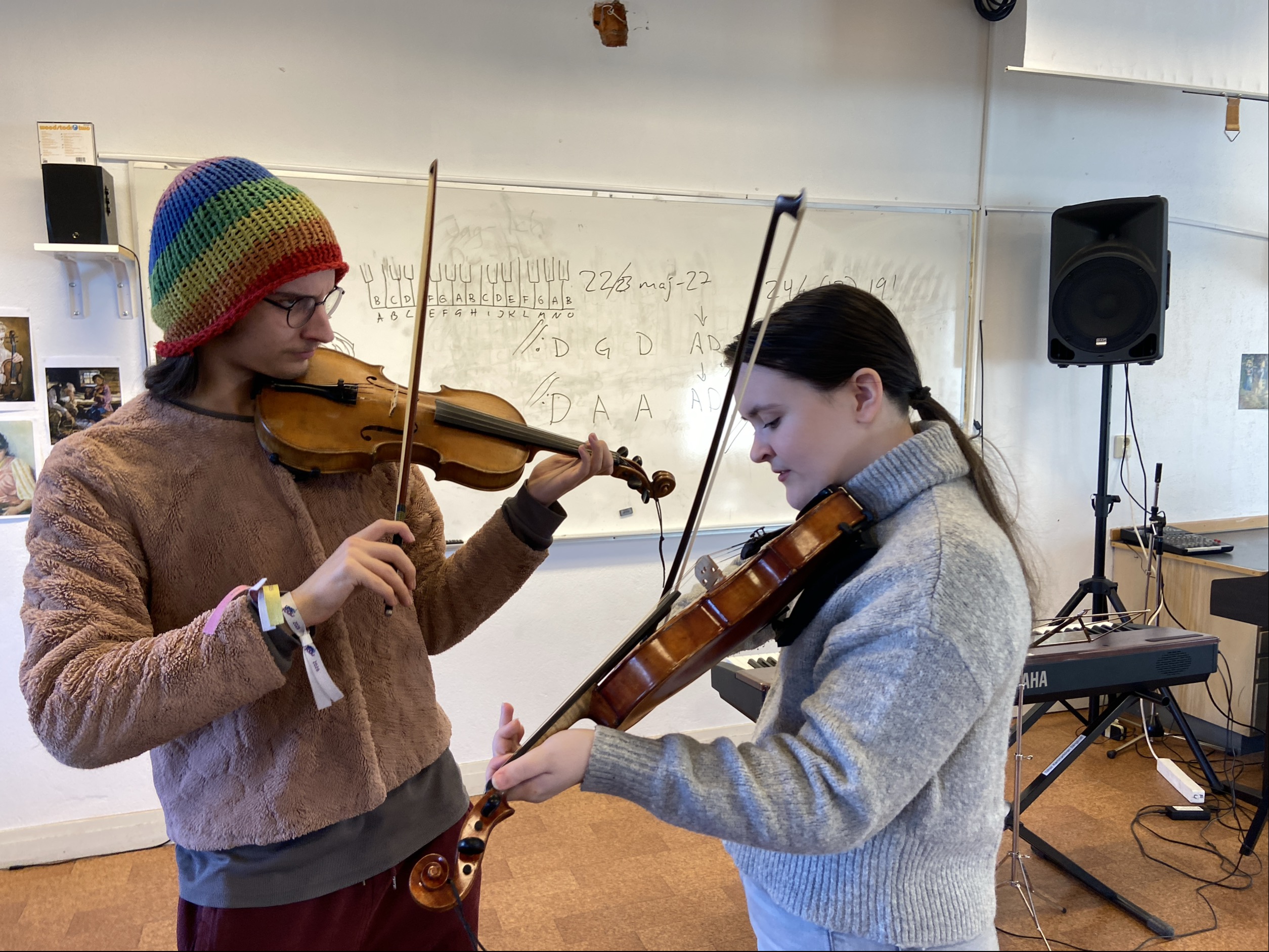
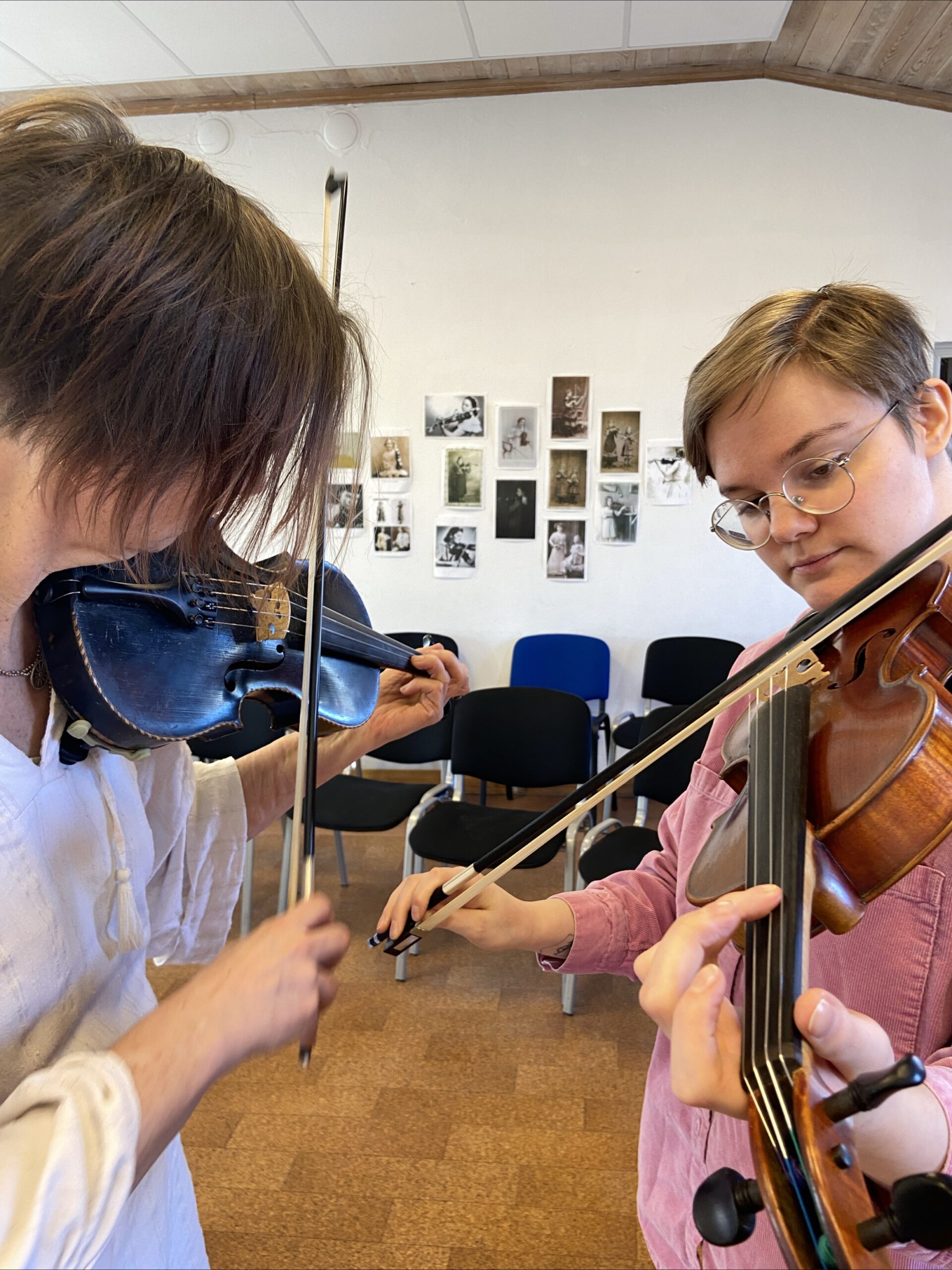
Janna-Li Janke practicing scales on the violin with Amanda Nilsson and Taran Janke-Anderberg
Section 07
Online Workshop Output
Workshop Summary
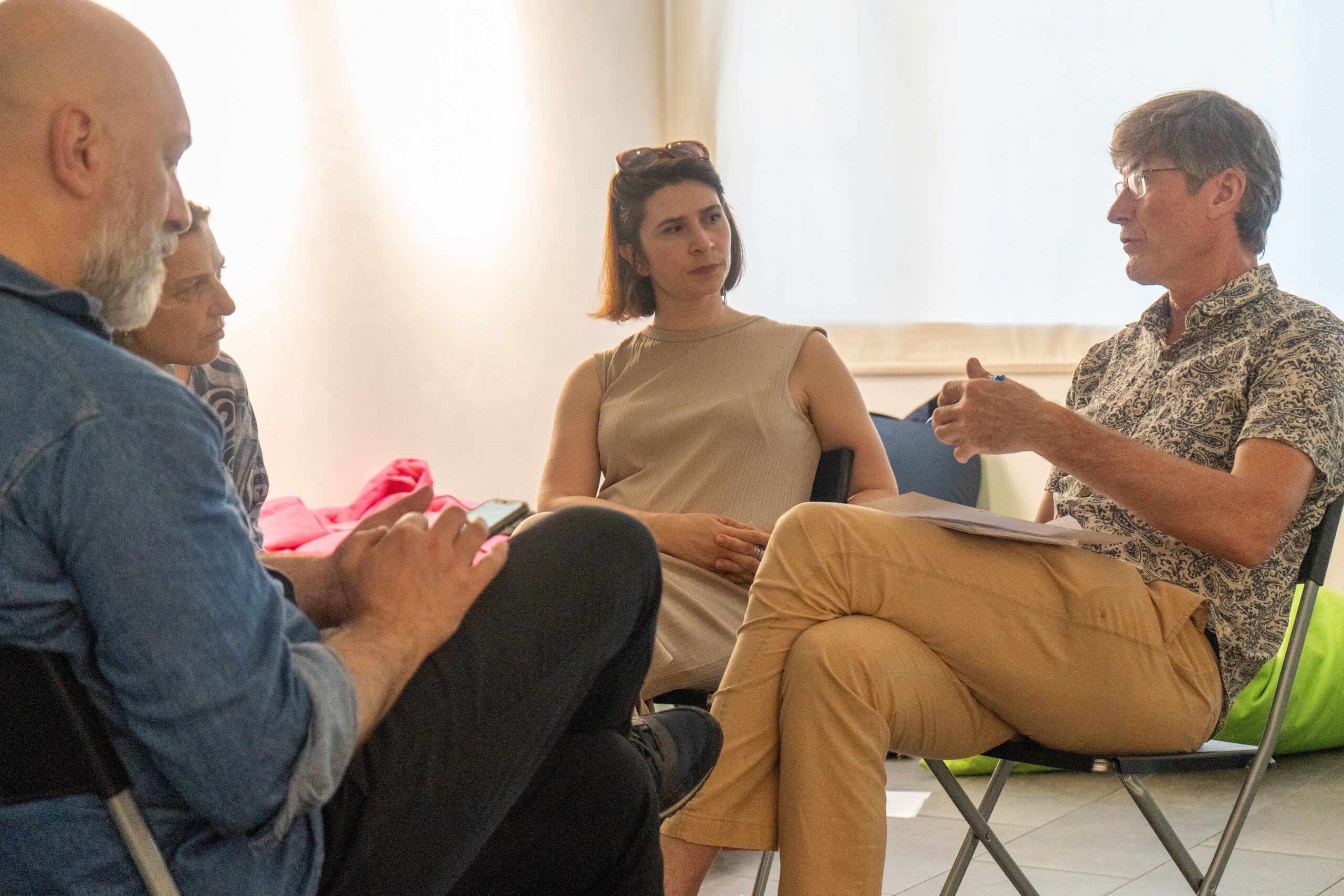
Folkuniversitetet recently led a workshop focused on inclusion and equality within creative mentoring. During the session, creative mentors shared their experiences and strategies for adapting their mentoring approaches to foster genuinely inclusive environments that meet the diverse needs of their mentees.
A central theme throughout the workshop was the importance of building authentic and trusting relationships between mentors and mentees. Participants emphasized that effective mentoring must begin with getting to know the mentee as a whole person: emotionally, creatively, and culturally. By meeting mentees where they are and cultivating a relaxed and informal atmosphere, mentors can build trust, encourage open communication, and help mentees feel safe enough to express their creative goals and support needs. Active listening, careful observation, and the creation of a safe space were described as essential for making mentees comfortable and engaged.
Mentors are encouraged to use a broad range of approaches to understand their mentees better. This includes asking open-ended questions, providing various forms of creative expression such as writing, drawing, or movement, and offering low-pressure opportunities for participation. Setting clear expectations and boundaries, while sharing aspects of their own experiences, can help humanise mentors and foster mutual respect and vulnerability.
Read Full Summary
The workshop also explored how inclusion and equality manifest differently in individual versus group mentoring. One-on-one mentoring allows for highly personalized support, particularly benefiting those who may be shy or marginalized. The challenge lies in ensuring that mentors do not impose their own preferences and remain flexible to the evolving needs of the mentee. In group settings, diversity can enrich the creative process and encourage empathy, but it also requires careful attention to group dynamics, power balances, and cultural sensitivity. Equity – adapting support to individual needs – is often more important than strict equality.
Ultimately, the mentors agreed that adapting their approaches and prioritizing inclusion leads to richer creative outcomes for everyone involved.
Explore the Full P2CC Guide
Return to the platform to explore all five guide sections developed by the P2CC partnership across Europe.