Section 00
How rapid digital change and the rise of AI are reshaping creative careers — and what it means for those who mentor young people entering the creative industries.
Section 01
In retrospect, we can say that the global Covid pandemic (2020-2023) represented a tipping point in the rapid acceleration of digital communications.
Across creative practices, as physical performance and presentation spaces went dark, it became necessary to transfer activities to the digital sphere. The pandemic coincided with the rapid take-up of the free accessible video conference calling, that we already now take for granted. In the field of creative mentoring physical proximity to the mentee was no longer necessary. Mentoring could be delivered in one-to-one or in group sessions across long distances, frontiers and boundaries.
A further transformative change in the digital sphere followed with bewilderingly rapidity as machine generated AI tools have radically disrupted traditional models of creative production. These developments have had a profound impact on the economics of creativity. It is in the context of such rapid and disorientating change that creative young people seeking to develop a career In the CCIs need to deploy an enterprising frame of mind and develop enterprise skills.
For this reason we identified Digitalisation and Enterprise Skills as a pressing current topic for creative mentoring.
This first section of the guide has been developed drawing upon the experience of the Creative Mentoring Exchange community of practice of creative mentors in widely different contexts across five participating countries spanning North, West, South and the East of Europe. That transfer and exchange of practice and learning, facilitated by digital technology, is in itself of great value, particularly in the context of the aims of the European Erasmus programme. We invite practitioners and artists working as ‘educators’ and ‘mentors’ in a variety of creative industry-linked, non-formal and formal contexts to join the Creative Mentoring Exchange https://www.rinova.co.uk/creative-mentoring-exchange
Rinova Malaga has responded to these needs in developing a range of digital learning resources, e-courses and interactive platforms which are referenced in this guide. At the same time the Guide draws upon the experience of Rinova’s Creative re-Work programmes in London supporting professional development for dancers and performers and the experience of delivering an online course for one of the first funded programmes of the European Institute of Innovation and Technology (EIT) Culture and Creativity. The preparation of the Guide also coincided with the welcome news that the UK is rejoining the Erasmus programme in 2026 and therefore the company’s experience in both London and Malaga will once again be integrated within a European context.
This section of the Guide offers a reflective overview of how this changing context is affecting the practice of mentoring. Its aim is not to provide answers but to share the insights of our P2CC community of practice, whom we would like to thank for their generous and engaged input. It aims to open up questions to reflect on, offers some practical activities to undertake with young people and points to further tools and resources for further study and reference.
Section 02
This Powerpoint presentation presents learning resources from the P2CC Creative Mentoring Exchange online session 1. The presentation covers key issues to consider and tools for delivering mentoring online. What are the benefits of online mentoring in comparison with face-to-face delivery, and what are its limitations? The presentation also introduces materials to support the development of enterprise skills.
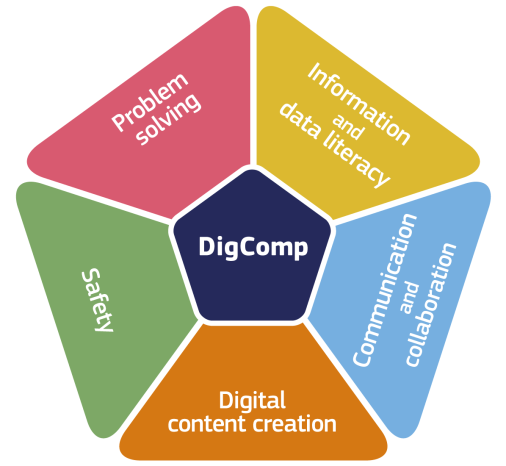
The EU DigComp (Digital Competence) framework is a reference model developed by the European Commission to define the digital skills citizens need for work, learning, and participation in society. It structures digital competence into five areas: information and data literacy, communication and collaboration, digital content creation, safety, and problem solving. DigComp describes proficiency levels, learning outcomes, and examples of knowledge, skills, and attitudes. It is widely used across Europe to support education, training, workforce development, policy design, and the assessment and certification of digital skills.
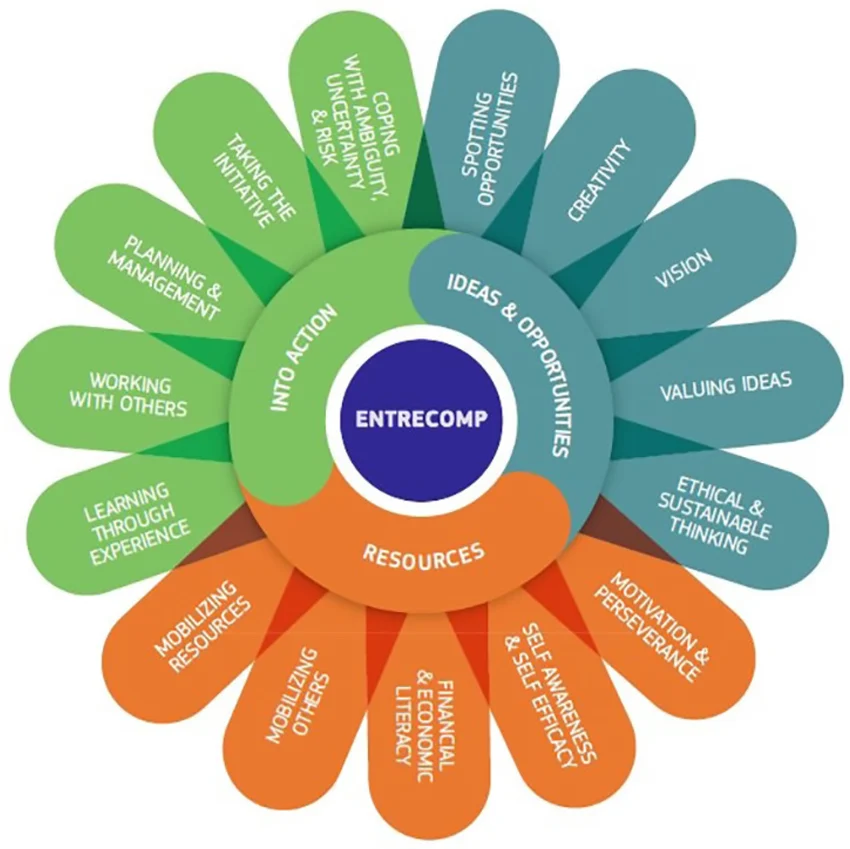
The Bridging the Gap Mentoring Design Journey offers an introductory pathway for creative mentors to use EU EntreComp framework in supporting young creatives to develop entrepreneurial competences. EntreComp defines entrepreneurship as acting on ideas and opportunities to create cultural, social, or economic value, structured around three areas: Ideas & Opportunities, Resources, and Into Action, broken into 15 competences with progression levels. For creative industry mentors, it supports designing learning that blends creativity, collaboration, ethical practice, and sustainability with practical skills like spotting opportunities, mobilising networks, managing uncertainty, and turning concepts into viable projects or livelihoods for young people within contemporary creative and cultural economies today.
Creative Soft Skills comprises an extensive online repository of resources identifying and valuing the soft skills and character traits associated with creativity, and how these can be transferred in creative entrepreneurship.
i-Create is a Tailored Training Framework delivering to young people an integrated package of modern training tools and approaches to develop and enrich their knowledge and CCI-related entrepreneurial skills and competencies. It includes an asynchronous online self-learning course with a total duration of 100 hours.
Creative re-work is Rinova’s Creative Academmy programme in London, taking an innovative approach to careers information, advice, guidance and support for those wishing to develop sustainable careers in the dance and performance sector.
The Creative Model Canvas adapts the well-known business model canvas as a tool specifically for visualizing, detailing and reflecting on creative projects. It is a highly flexible and adaptable template that can be used to support young people through every stage of conceiving, designing and implementing a creative project or business idea
Section 03
AI4Creativity is an Erasmus Plus co-operation project that explores the positive applicati…

AI4Creativity is an Erasmus Plus co-operation project that explores the positive application of AI tools in fields of creativity, including music and sound, design, visual arts, writing and narrative and video, animation and gaming. It is designed for trainers and creative professionals, active or in training, to equip themselves with digital tools and skills, including AI tools, to remain competitive and relevant in the Creative Industries, and includes blog articles, guides, introduction ot practical tools and workflows and a free e-course.
The EU Erasmus DISCO project aims at improving the digital competences of guidance and car…
The EU Erasmus DISCO project aims at improving the digital competences of guidance and career counselling professionals facing radical challenges and changes in their practice through tools, learning content and activities.
The Online Career Counselling Guide is one of the intellectual outputs of the EU Erasmus …

The Online Career Counselling Guide is one of the intellectual outputs of the EU Erasmus Prometheus project. As a cross-sectoral guide, it offers an overview of the online environment, context, tools and methods available to mentors supporting young people into careers.
The NESTA Creative Enterprise Toolkit offers practical resources for setting up a creative…

The NESTA Creative Enterprise Toolkit offers practical resources for setting up a creative business. Designed specifically for creatives, it takes a step away from traditional linear business planning approaches and provides three practical handbooks, worksheets, case studies and tutor notes, that can be used with mentees to take them through the steps of realising a business plan.
Youth Venture EU is a games-based learning platform designed to boost young people's sense…

Youth Venture EU is a games-based learning platform designed to boost young people’s sense of initiative and entrepreneurship: including 10 short training pills, 3 digital games and how to turn your ideas into action.
Section 04
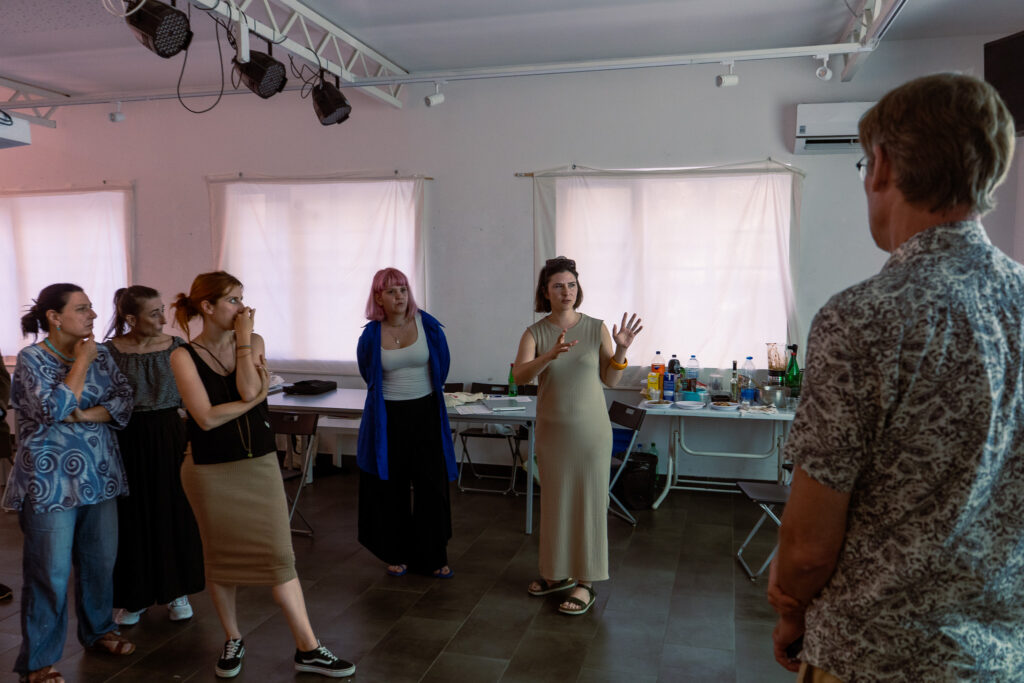
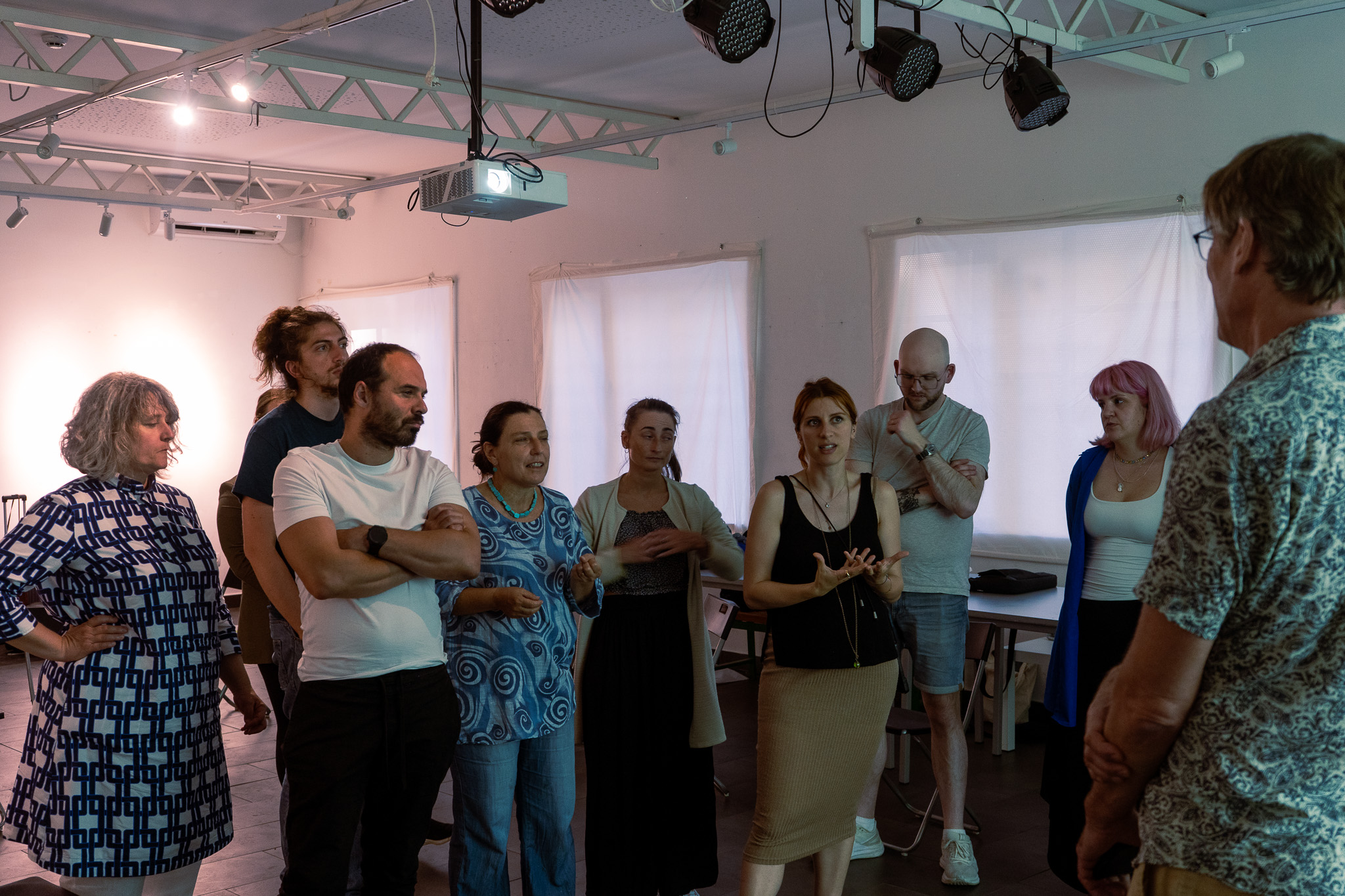
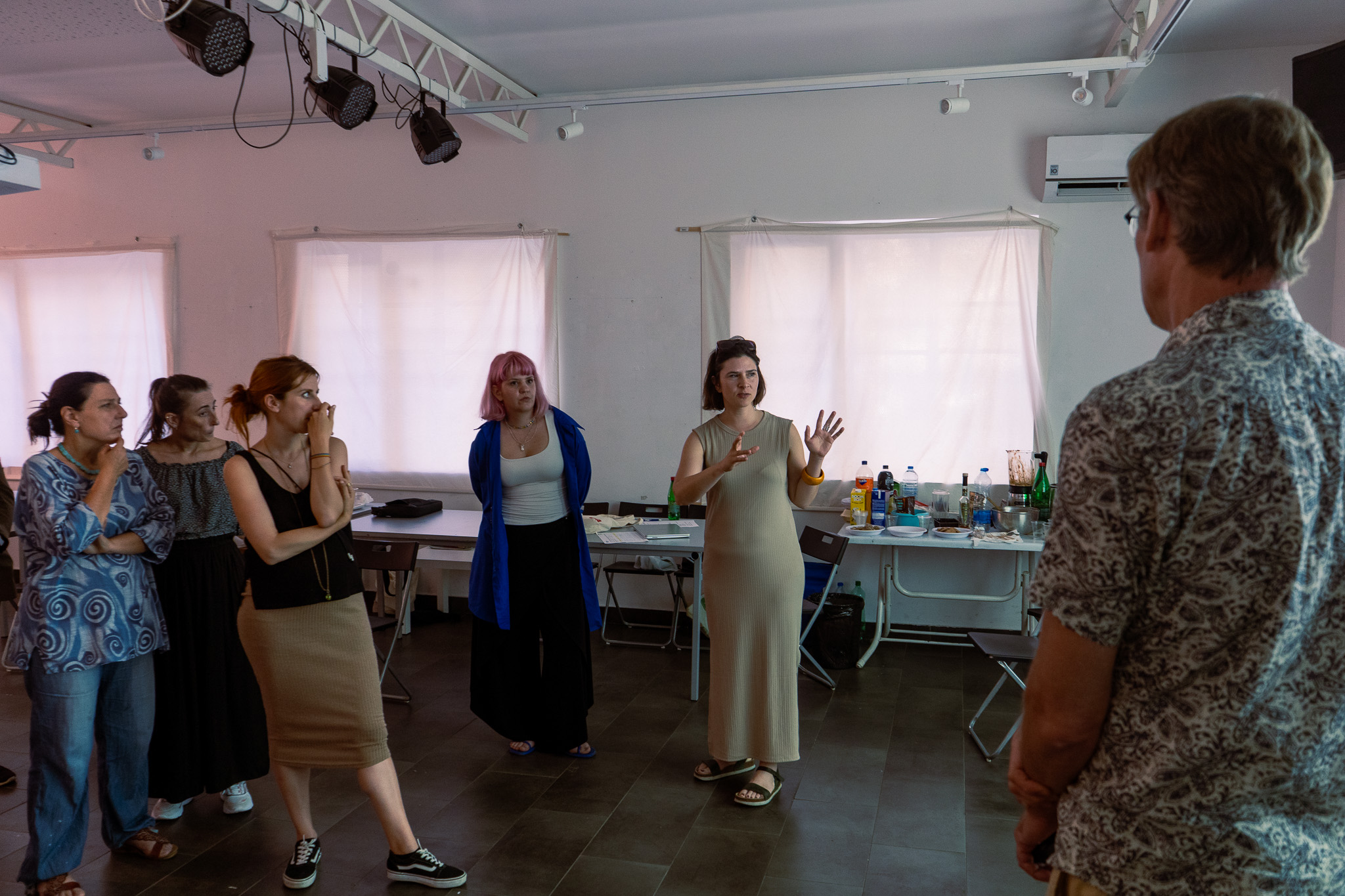
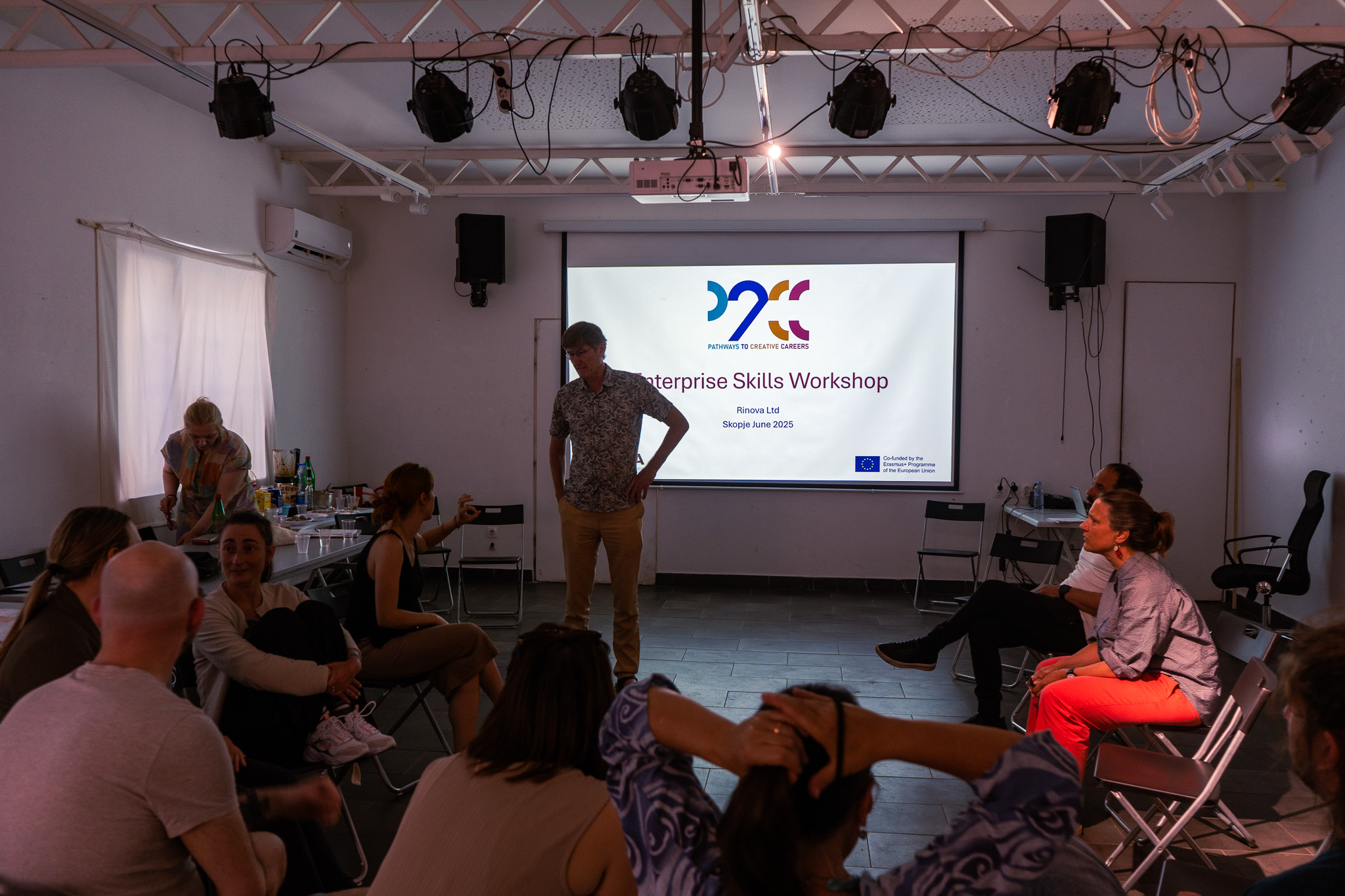
The following activities draw upon the workshops led by Rinova involving the P2CC mentors community of practice. A workshop at Jadro Centre in Skopje, North Macedonia on 1 June 2025 focused upon enterprise skills. This was followed by an online session on the subject of online mentoring which took place on 20 October 2025, which is described in Section 7. Entrepreneurship and enterprise skills Stage 1: participants were invited to share their experience of mentoring. – How did you start mentoring creative young people? – What motivated you? – Tell us a story of how your mentoring has helped a young person’s creative development Stage 2: What do we mean by Enterprise Skills? Participants were asked to discuss: Are Enterprise Skills relevant for a young person developing their creativity? Why? Stage 3: Participatory Activity Participants undertook the participatory activity exploring the theme of enterprise skills Stage 4: What works in mentoring creative young people to develop enterprise skills and an entrepreneurial mindset? As a framework for the discussion, we introduced the Entrecomp model.
Key outcomes: For successful mentoring it was a helpful starting point to think back to what motivated you as a mentor, and the stages at which you developed the enterprise skills to make a living. The stories told at the beginning of the workshop informed this discussion. By reflecting on the stages in our own experience we can come closer to understanding the stages young people pass through.
In the discussions participants recounted a range of mainly positive expériences of how creative young people can be supported through mentoring to develop enterprise skills: • Pro-activity. Take the lead. Take actions. DO! • Knowing how to assess the value of your work and how it relates to the audience, and commercially to the market. • Put your work into business – self-finance, planning, setting up & running a company • Before selling, understanding the bureaucracy of setting up as a freelance artist, getting a pension plan, tax etc. • Finding a market to make money or grants • Short term vs. Long term financial models • Social and values-based entrepreneurship models • Enterprise skills are not just about money, but also about how to run a project and make it work. The discussions explored the complex inter-relations between creativity and enterprise. It was pointed out that creativity is not just about “the arts”. Creativity is expressed in many – sometimes unrecognised ways. Most participants agreed that you can learn enterprise skills and mindset through study. Some were wary of the idea of a “creative personality” or “creative thinking”. It was suggested that being enterprising is separate from quality or originality. A person can think they invented something and sell it and be successful, even if it is not an “original” concept. Conversely, a person can be creative and original, but not believe in their product or know how to market it. So, young people need to: • know their strengths and build a career with relevance and honesty • learn how to survive and what to sell • survive with a heart
Objective: To re-introduce the “gap” between impulse and execution, helping the mentee claim ownership over their creative decisions.
Description: 1. The Digital Impulse: The mentee begins a creative task using their usual digital tools (e.g., sketching a layout, drafting a piece of text, or sequencing a beat).
2. The 5-Minute Blackout: At a mid-point in the process, I ask the mentee to turn off their screen or step away from the device entirely.
3. The Analog Intervention: The mentee must perform one “friction-heavy” action in the physical world. This might be sketching the concept on a scrap of paper, describing the “feeling” of the work out loud, or finding a physical object that represents the core of their idea.
Why it works: It is simple, transferable, and requires no specialized software. It teaches young people that their most valuable creative asset isn’t the software they use, but their own ability to pause, reflect, and override digital defaults with human intent.
4. The Manual Override: They return to the digital tool and must change one significant element of their work based solely on that analog reflection.
1. How did turning off the machine and “going analogue” change the creative process for the mentee?
2. In what way was the result of the process different?
3. Did the mentee experience a difference in their process? What did they learn from this?
Objective: to support development of an entrepreneurial mindset by focusing on postive strengths, building on what works well, rather than what is wrong. Description: The process can be followed progressively in a series of steps with your creative mentee, or with a group, giving time between each step for self-reflection.
STEP 1. Discover: appreciating the best of what is
STEP 2. Dream: imagining what could be
STEP 3. Design: co-constructing what should be
STEP 4. Destiny: implementing the design. What will we do? Why it works Appreciative Enquiry is a simple, staged approach that builds confidence, motivation and self-agency
1. What enterprise skills did the process stimulate for the mentee?
2. Which stages of the process did the mentee find most challenging and why?
3. At the end of the process, ask the mentee to reflect on the distance they have come since they set out on this journey. What is the key thing they have learnt along the way?
Objective: To help participants critically explore and compare the advantages and disadvantages of online and face-to-face mentoring. Tools: Miro board, video conferencing platform Activity Steps:
1. Set-up: Create a Miro board with two main columns: Online Mentoring and Face-to-Face Mentoring. Under each, add sections for Advantages and Disadvantages.
2. Individual Brainstorm (5–10 min): Participants add digital sticky notes with their ideas in each section.
3. Group Discussion (15–20 min): In small groups or plenary, participants cluster similar ideas, discuss differences, and add comments or examples.
4. Synthesis (10 min): Groups highlight key insights, surprising points, and situations where one mode may be preferable to the other. Outcome: Participants gain a shared, visual understanding of the strengths and limitations of both mentoring approaches and can make more informed choices based on context and needs
1. How did the outcomes of using MiroBoards compare with a traditional approach of using post-its/flipcharts in a workshop?
2. What surprised you in the responses?
3. How did the responses change your perception of the respective strengths and weaknesses of online and face-to-face mentoring. What will you do differently in future?
Objective: This is a physical workshop designed for a group to explore the subject of enterprise skills for young creatives
Description: Two options are offered to the group: Is entrepreneurship about training or is it about having a creative personality?
Stage 1: Participants are invited to place themselves on one side of the room or the other. Those who believe that to develop entrepreneurship, training is primary stand on one side. Those who believe that having an entrepreneurial personality is primary stand on the other.
Stage 2: A participant on one side asks a question with the aim of finding agreement between the two sides. If somebody on the other side agrees with the statement then each take a step towards the middle of the room. This process is repeated with the aim of drawing the group togther in the centre of the room Outcome: The ostensible purpose of the game is to find points of agreement and meet in the middle of the room. However, the key purpose is the process of exploring the topic from different perspectives to better understand multiple viewpoints on the value of enterprise skills for young people entering creative careers. therefore following the activity, invite participants to reflect on the dialogues and allow space to follow up emerging themes
1. How did the game change your perspective on the value of enterprise skills?
2. How will you take what you learnt from the game into your mentoring?
3. What was the key emerging theme from the discussions?
[Desc]
[Desc]
Section 05

“
The “One Thing” That Works: Radical Transparency in the Messy Middle In a digital landscape characterized by fragmented attention and a relentless pressure for immediate, polished results, I have found that the most effective mentoring happens when I move from being a “content provider” to an Expedition Guide.
Young people today are natives of high-velocity digital ecosystems that often prioritize the “flattened” final product over the depth of the process. I have found that true resonance is achieved by “meeting them where they are”, not just technologically, but emotionally. I approach a mentee’s sense of uncertainty or digital fatigue not as a bug to be fixed, but as a valid and powerful starting point for growth.
The “one thing” that consistently works for me in an online setting is the Radical Externalization of the Process. To counter the intimidation of “perfect” digital outputs, I make my own “messy middle” visible. I share my errors, my pivots, and the friction of my real-time creative thought. By making my own cognitive architecture transparent, I help the mentee move from being a passive consumer of digital tools to a sovereign Creative Artisan.
I don’t teach them a static curriculum; I teach them a practice of self-observation and intentionality. This transforms the screen from a site of passive consumption into a “foundry” where they can forge their own creative identity. When I show them that the struggle is the most valuable part of the work, the digital distance between us disappears, and a genuine space for co-creation opens up.
“

“
“One approach I have found consistently effective when mentoring young creatives on enterprise skills is combining digital microlearning, challenge based learning and game based learning into a coherent learning journey that feels relevant to their real lives.
Young creatives often have strong ideas and values, but they may feel disconnected from traditional entrepreneurship training, which can appear abstract, overly technical or disconnected from their everyday realities. Microlearning addresses this gap by breaking complex enterprise concepts into short, focused learning units that can be accessed flexibly. This allows learning to fit around young people’s existing commitments, rather than competing with them.
What makes microlearning particularly powerful is when it is embedded within challenge based learning. By working on concrete, real-life scenarios (often inspired by cultural, social or creative contexts) young people can immediately see the relevance of enterprise skills to their own ambitions. Challenges encourage experimentation, reflection and iteration, helping learners move from passive consumption to active problem solving.
Adding game based learning further increases engagement. Games introduce narrative, feedback and progression, connecting learning to formats that young people already encounter in their daily digital lives. This lowers barriers to participation, reduces fear of failure and creates a safe space to test ideas and decisions.
These principles underpin the YouthVenture4EU initiative which I am currently running. In the coming months, the project will release a series of digital training pills and interactive games for young people, alongside a practical handbook for facilitators. Together, these resources offer concrete tools to apply microlearning, challenge-based and game-based approaches to enterprise education for young creatives in an inclusive and motivating way.”
“

“
One thing I have found works particularly well when mentoring creative young people to develop enterprise skills is building self-awareness as a foundation.
I focus on prompting them to reflect on who they are as artists, the value they bring, and the perspective they offer through their craft. In many ways, my role is less about providing answers and more about facilitating their thinking process. You can often see the moment when something shifts, when their ideas begin to connect, and a stronger sense of clarity and confidence emerges. That confidence becomes the fuel that helps them step out of their comfort zones.
This is especially important when it comes to building connections within the industry, which is often where they show the most resistance. From my own experience, I understand the hesitation: the fear of being exposed, evaluated, or judged while still figuring out where you fit. I try to reframe this by emphasising that it is not about having the perfect pitch or a fully developed craft from the outset. Instead, it is about taking those first steps, preparing, initiating conversations, and gradually building confidence through practice.
Over time, this combination of deeper self-awareness and a willingness to act, even without meeting their own expectations of “greatness,” allows them to shape their own path. It is through this process that they begin to define success on their own terms, and continue to redefine it as they grow.
“

“
Mentoring is an encounter. There is a lot can be done to prepare for the encounter, to set up a space in which the mentee will feel safe to develop a relationship of trust, to set expectations and goals, to plan the time available and to provide tools and templates that may assist the mentee in progressing and resolving the issues that are facing them. It can help to focus the mentoring on a specific question or challenge or goal. Setting a clear structure or framework for mentoring ensures that the time is used effectively and provides a basis of assurance for both mentor and mentee. And the process of the mentee setting themselves an action plan and following it through is a fundamental element in nurturing their entrepreneurial mindset and resilience. All of these elements and methods in mentoring are fundamentally important but none of them can prepare me for the encounter that will take place when I meet my mentee. For one person, establishing trust and a feeling of safety and confidence may be a huge stumbling block to progress. Another will pour out their heart and soul at first meeting. One mentee may set out to challenge me. Another will diligently follow everything I say. The challenge for me as a mentor is to try to help the mentee realise their own goals. I may come to the mentoring session with an idea of what those goals are, I may even have asked the mentee to try to express their goals, but in the encounter when we meet, I am faced with another person who may not be so sure what their goals are, a person to whom I have to adapt, who may not act as I expected. This is why advice on mentoring stresses active listening and “mirroring”, and the power of asking questions. And it is why I like the idea of “reverse mentoring” – that mentoring is a two way learning process, a dialogue in which both mentor and mentee both learn from each other in the encounter.
“

“
I didn’t take on a role mentoring young creatives intentionally as a professional role or to earn money. When I mentor someone it is because that person has requested it and allows me to do so. Mentoring differs from training in not having a prescribed pre-established goal.
Therefore it is by default reactive. You need to respond to the mentee’s intellectual needs, even those that do not appear explicitly.
What works online is the same as what works in person. You don’t lecture, you give tools and do. If possible do together. Usually, in my mentoring, even if the topic starts in person, the follow-ups are online. I start with the tools the mentee uses, whatever they are, but also introduce tools that fit with me.
Providing artifacts and targets is essential. As is simplicity (the art of maximizing the amount of work not done).
Young people are a generation of digital natives, whose knowledge is often under-valued by adults. The actual truth is the opposite. They know technology. They are accustomed to processing and analysing way more information than anyone over 35 (unless they are adult gamers).
Therefore an efficient approach to mentoring these young people starts with leaving your adult ego behind, giving them space, acknowledging their culture, behaving reactively to their inputs and requests. Then move forward to doing, rather than showing – at least don’t show by explaining. Above all, avoid boring them with long lectures and explanations.
Acknowledge that the old knowledge era that you are familiar with is over. Your role as a mentor is to get out of the way: to open doors, windows, paths.
“
Section 06
[Video 1 caption]
[Video 2 caption]
Section 07
The first online session offered an opportunity for reflection on delivering mentoring online. Bringing together a group of mentors ranging from experts in this topic to those who had no experience at all of online mentoring, it offered a mixture of practical introduction and tips for what works, alongside an opportunity for sharing experience and discussion. It was the first of the sessions, and perhaps inevitably we had some technical issues. A key insight from the session was a reminder that technical glitches can be a frequent factor in the online experience.
As this was the first online session, we took time at the beginning for mentors from all five participating countries to introduce themselves, and gave a brief summary of the P2CC programme, introducing the concept of the Community of Practice.
The first part of the session offered an introduction to the practicalities of setting up an online mentoring session.
The session then offered further detail on selecting online communications technologies for your purpose, briefly introducing the impact of Artificial Intelligence with reference to more detailed guidance on using AI in creative fields.
The session introduced online tools such as:
Discussion about the relative advantages of mentoring online and face-to-face are summarised in the accompanying powerpoint. Key insights included understanding the different dynamics of engagement in an online setting, and the importance of setting expectations and an environment of openness at the outset especially with a group who do know each other. The potential of online mentoring to expand exchange of practice beyond borders is being embraced, but has also resulted in a widely competitive field. We shared examples of mentoring offers on Instagram and also peer mentoring frameworks such as www.clockyourskills.com A key takeaway was a recognition of the futility of seeking a position of technological mastery, recognising the impact of commonly felt digital fatigue. To cope with the high velocity of technological change, a mentor may find ways to open a human space in which the frustrations of the technology and how we respond to it are openly acknowledged.
Return to the platform to explore all five guide sections developed by the P2CC partnership across Europe.